Inicio › Ordenadores › Canon-Computer

Canon-Computer

💾 Ordenadores5 fichas
más de Canon

Máquinas (1–5 de 5)

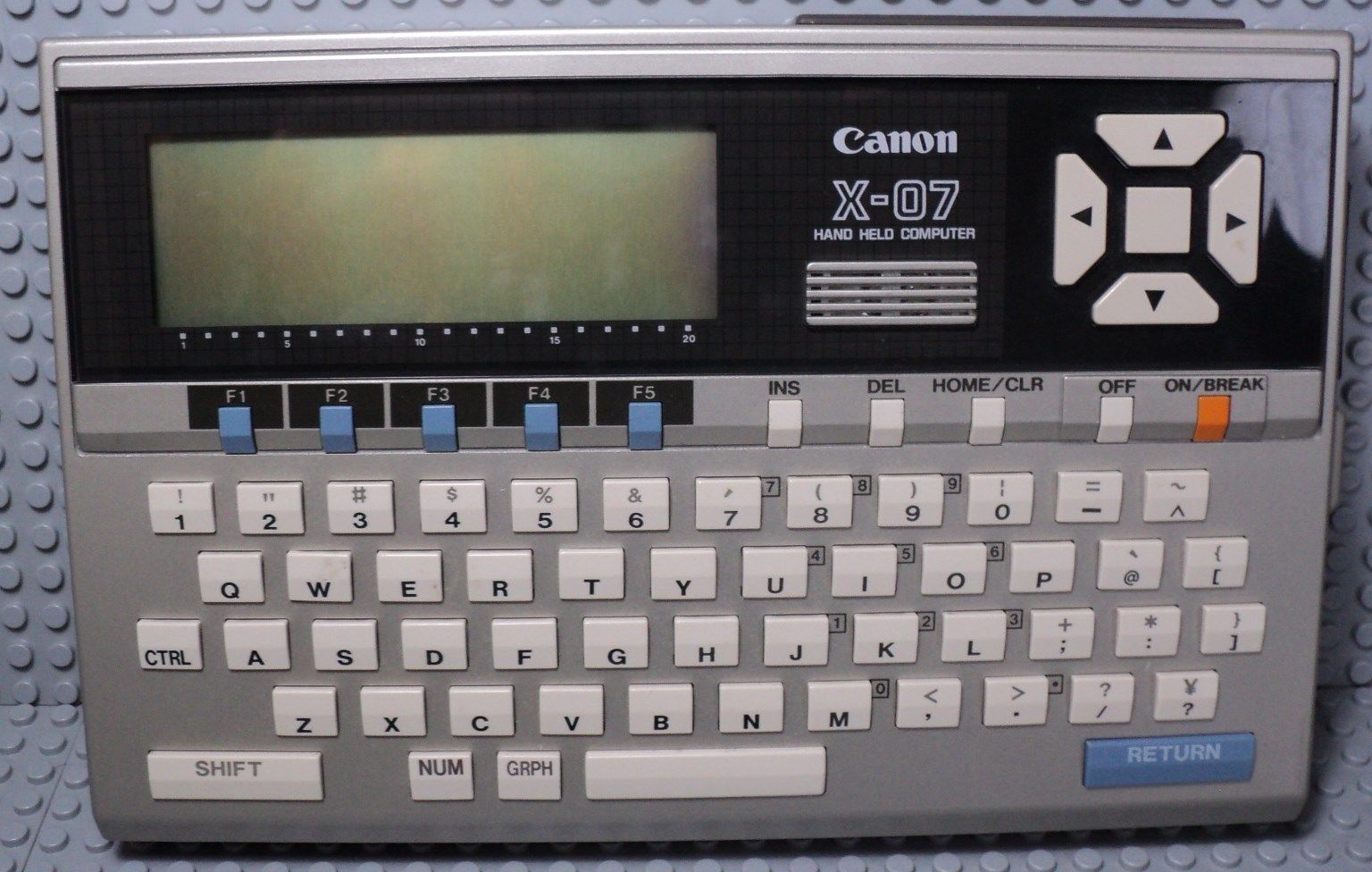
Canon X-07
Canon X-07
📅 1983🌍 Francia
Ficha técnica

Características

Lenguajes  	Microsoft Basic
Teclado  	QWERTY / AZERTY, 60 chicklet Teclas, 5 function Teclas, arrow Teclas and a sort of numeric keypad (mapped on the letters)
CPU  	National Semiconductor NSC 800 (CMOS Tecnología, Z80 compatible)
RAM  	8 KB (6748 bytes free for Basic)
ROM  	20 KB
Modos de Texto  	4 x 20
Modo gráfico  	120 x 32
Colores  	monochrome LCD Pantalla
Sonido  	Yes, beeper
Tamaño/Peso  	20 x 13 x 2,6 cm / 480 gr
Puertos de entrada/salida  	Parallel port, Expansion port,Tape recorder, Serial port, Cart slots, card slot
Almacenamiento interno  	RAM-cards
Fuente de alimentación  	External PSU (4.5v - 450 mA) or 4 Pilas cells
Precio  	610  (France, september 83)
457  (France, november 83)
335  (France, march 84)
Canon Cat
Canon Cat
📅 1987
Ficha técnica

Historia

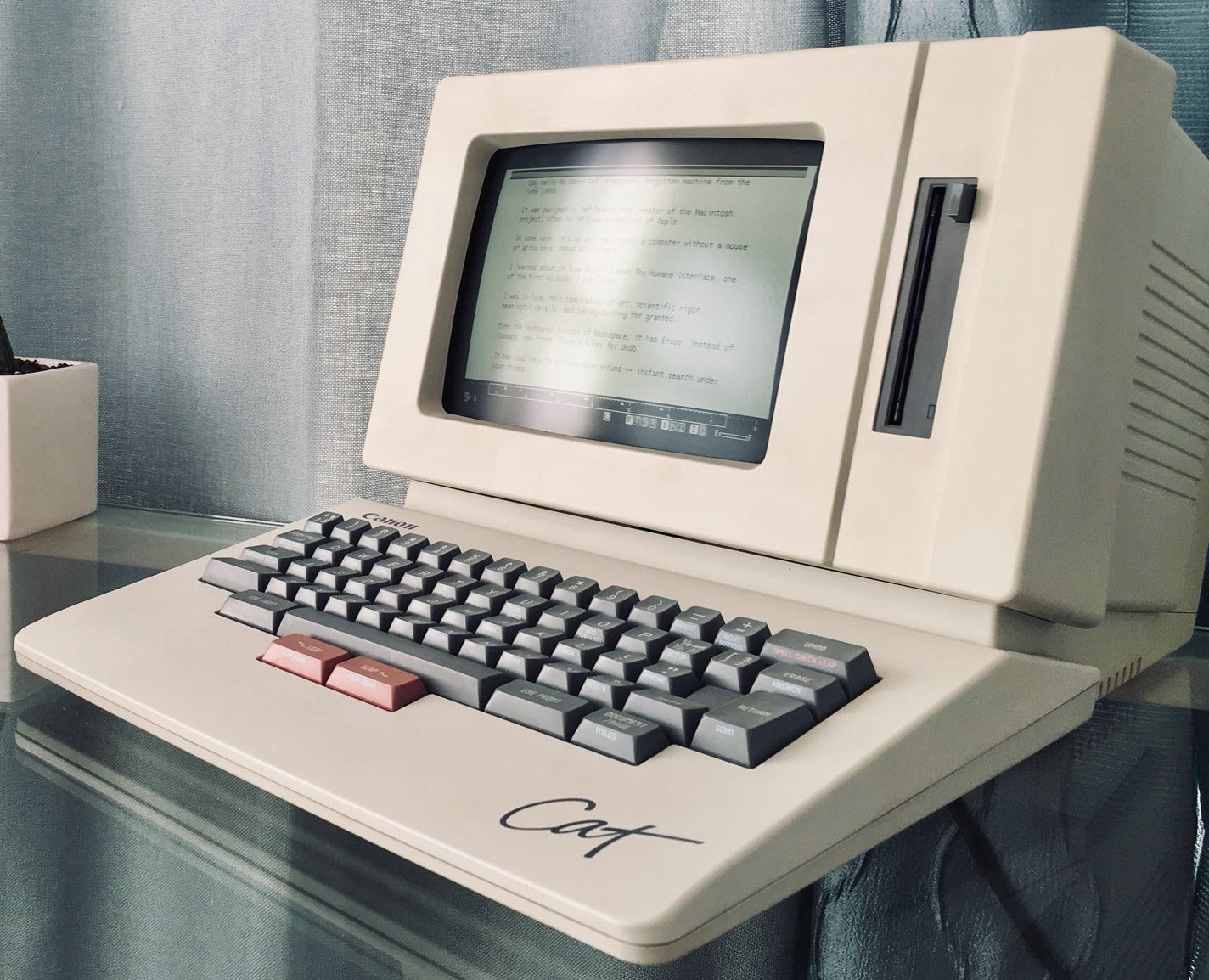
Canon Cat is a task-dedicated desktop computer released by Canon Inc. in 1987 at the price of U.S. $1,495. On the surface, it was not unlike dedicated word processors popular in the late 1970s to early 1980s, but it was far more powerful, and incorporated many unique ideas for data manipulation. Canon Cat is primarily the creation of Jef Raskin, the originator of the Macintosh project at Apple. After leaving the company in 1982 and founding Information Appliance, Inc., he began designing a new computer closer to his original vision of an inexpensive, utilitarian peoples computer. Information Appliance developed the Swyft computer prototype, and then developed and licensed it to Canon as the Cat. BYTE in 1987 described the Cat as a spiritual heir to the Macintosh. It features a text user interface, not making use of any pointer (mouse), icons, or graphics. All data are seen as a long stream of text broken into several pages. Instead of using a traditional command line interface or menu system, the Cat makes use of its special keyboard, with commands being activated by holding down a Use Front key and pressing another key. The Cat also uses special Leap keys, which, when held down, allows the user to incrementally search for strings of characters. The machines hardware consists of a 9-inch (229 mm) black-and-white monitor (80 x 24 character display, 672 x 344 resolution), a single 3½-inch 256 KB floppy disk drive, and an IBM Selectric–compatible keyboard. It uses a Motorola 68000 CPU (like the Macintosh, Lisa, Atari ST, and Amiga) running at 5 MHz, has 256 KB of RAM, and an internal 300/1200 bit/s modem. Setup and user preference data are stored in 8 KB of non-volatile (battery backed-up) RAM. The Cats array of I/O interfaces encompasses one Centronics parallel port, one RS-232C serial port (DB-25), and two RJ11 telephone jacks for the modem loop. The total weight of the system is 17 pounds (7.7 kg). An extensive range of application software is built into 256 KB of ROM: standard office suite programs, communications, a 90,000-word spelling dictionary, and user programming toolchains for Forth and assembly language. A text-only machine, the Cat includes graphics routines in ROM as well as connectors for a mouse or other pointing device that are never used. There is a defunct software project called Archy, initiated by Raskin, to develop a similar yet even more capable system for current computing systems. The project was designed to eventually replace current software user interfaces.

Curiosidades

Instead of the mouse, the computer has two suction buttons below the spacebar to jump the cursor

Canon Notejet
Canon Notejet
📅 1993
Ficha técnica

Historia

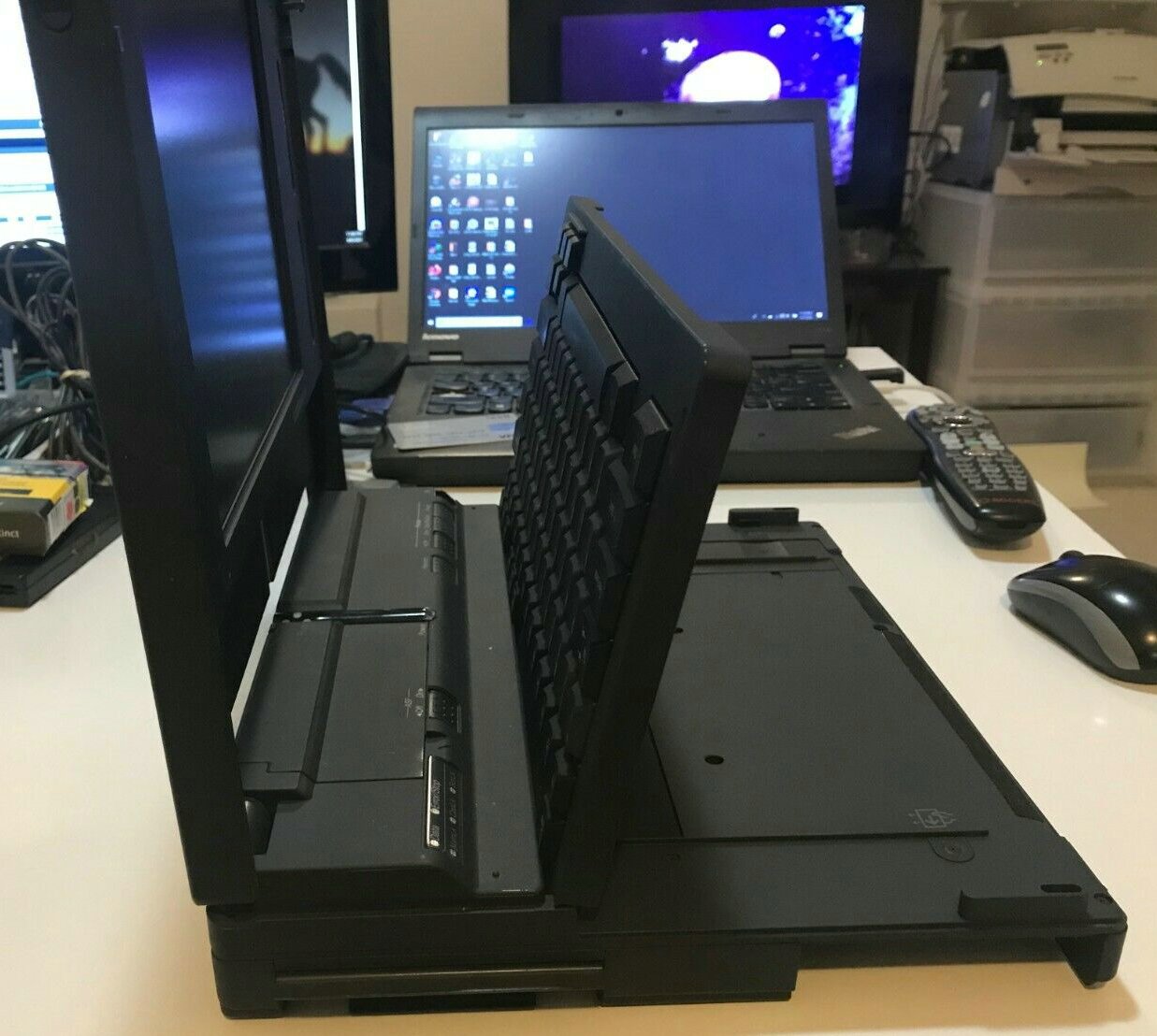
Combo Notebook and Printer

Canon Object Station
Ficha técnica

Historia

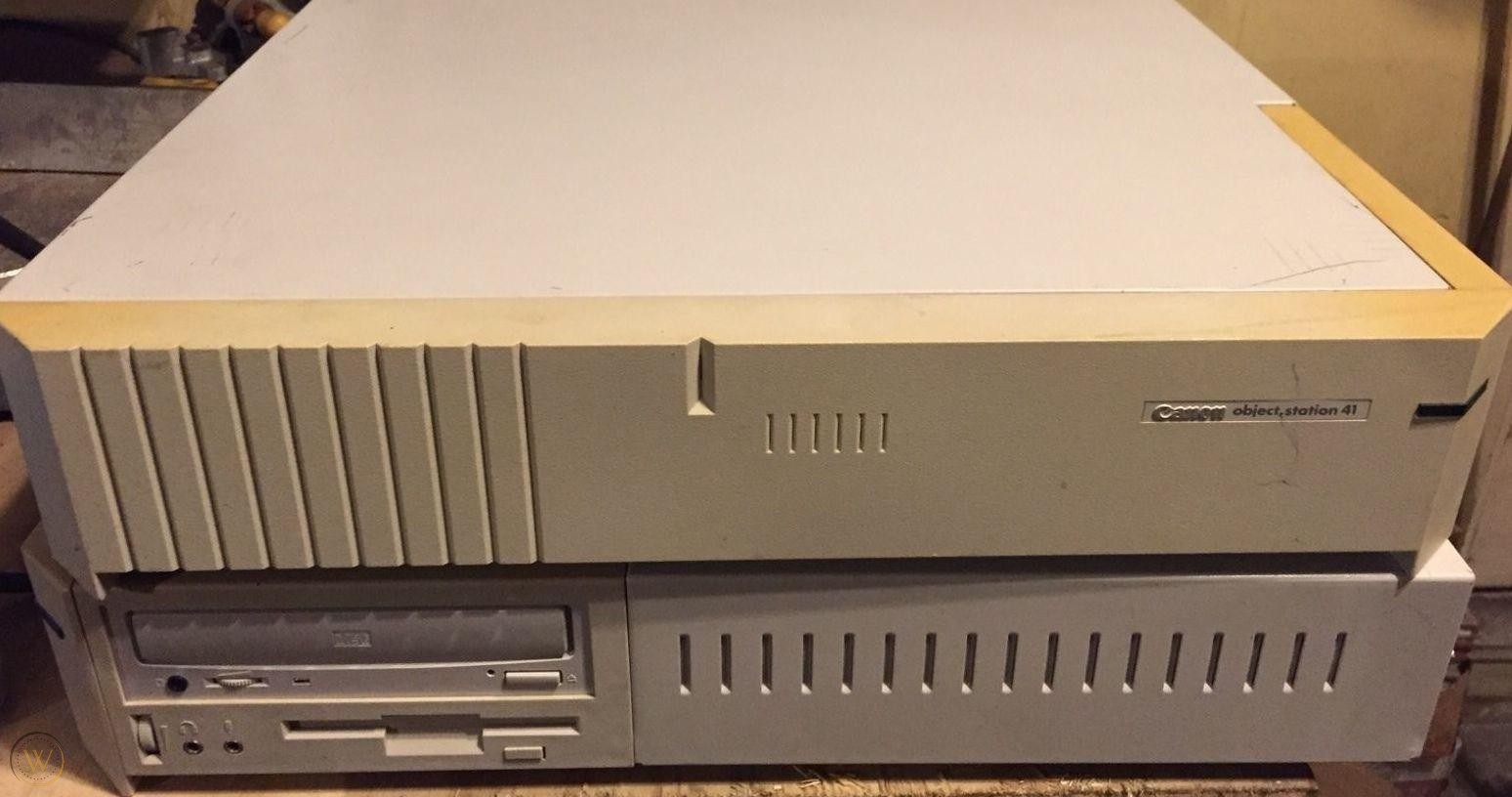
Los Canon object.station son una línea de estaciones de trabajo basadas en procesadores Intel y con sistema operativo NEXTSTEP desarrolladas por Canon Inc. y comercializadas en 1994 y 1995. Canon era uno de los mayores accionistas de NeXT (además había fabricado las impresoras de la gama y el disco magneto-óptico del NeXTcube). Al abandonar NeXT el hardware en 1993, decide comprar esa línea de negocio y lanzar su propia línea de estaciones sucesoras de las míticas NeXTstation. A diferencias de estas, basadas en microprocesadores Motorola, Canon opta por el Intel 80486 y el Intel Pentium y usa una arquitectura PC, pero optimizada para NEXTSTEP.

Características

Manufacturer: Canon
Model: Object.Station 41
CPU: Intel 486DX4@100MHz
RAM: 16 MB (up to 96 MB)
Resolution: max. 1280×1024
Color: 16 bit
Interface: Fast-SCSI-2, Ethernet, parallel, 2 * serial, keyboard, mouse, video, microphone, headphone, stereo out
Drives: 500 MB HDD, CD-ROM, 3.5″ floppy disk drive
OS: NEXSTEP, Openstep, Windows NT
Released in: 1994
Initial price: $5000

Página 1 de 1