Inicio › Ordenadores › GraphicsCards

GraphicsCards

💾 Ordenadores16 fichas

Máquinas (1–16 de 16)

Graphics Cards
Graphics Cards
📅 1980
Ficha técnica

Historia

A graphics card (also called a video card, display card, graphics adapter, VGA card/VGA, video adapter, display adapter, or colloquially GPU) is a computer expansion card that generates a feed of graphics output to a display device such as a monitor. Graphics cards are sometimes called discrete or dedicated graphics cards to emphasize their distinction to integrated graphics processor on the motherboard or the CPU. A graphics processing unit (GPU) that performs the necessary computations is the main component in a graphics card, but the acronym GPU is sometimes also used to refer to the graphics card as a whole.

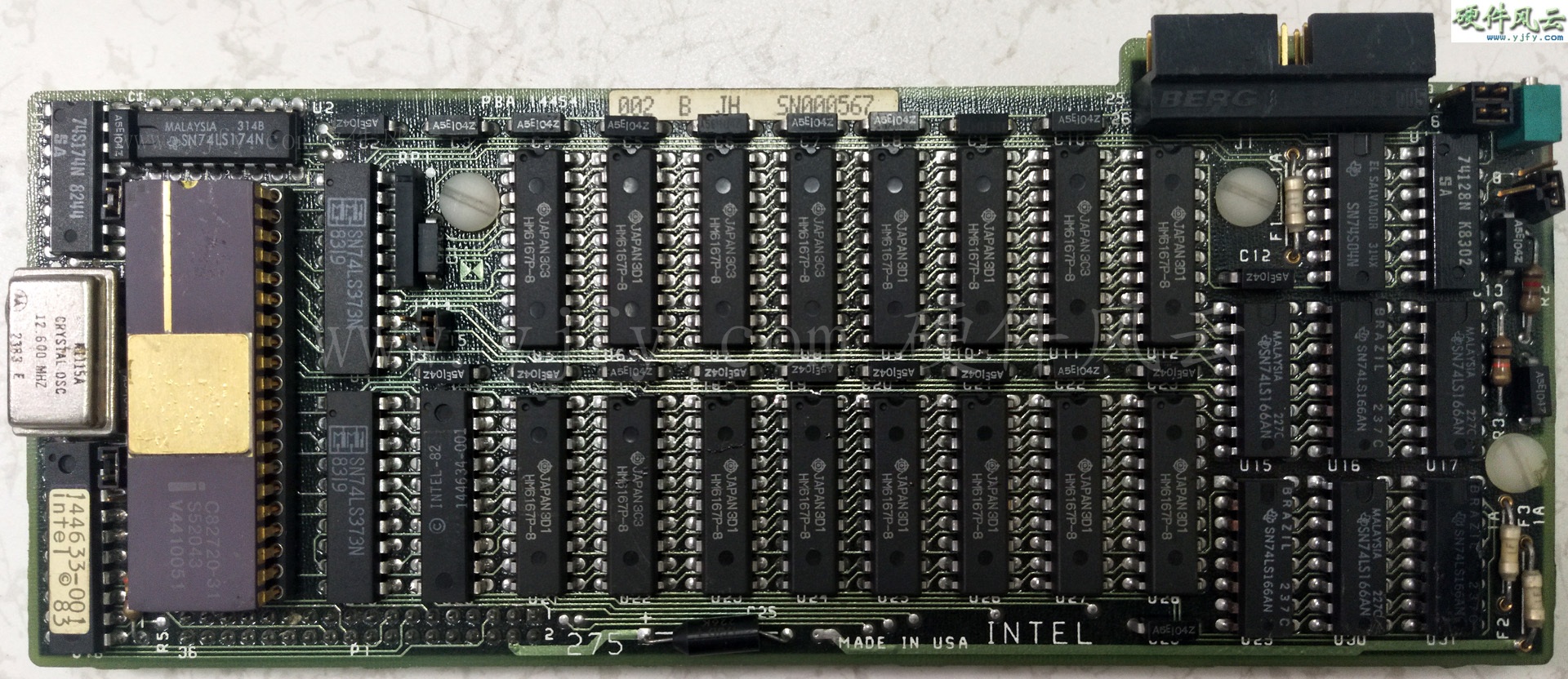
ISBX 275 Video Graphics Multimodule
📅 1982
Ficha técnica

Historia

Intel entered the video card market by introducing the iSBX 275 Video Graphics Multimodule in 1983. It was capable of displaying eight colors and a 256 x 256 resolution.

Ati VGA Wonder
Ati VGA Wonder
📅 1987
Ficha técnica

Historia

Some VGA Wonder cards even featured a mouse port for mouse connectivity.

Super VGA SVGA
Super VGA SVGA
📅 1987
Ficha técnica

Historia

Super VGA (SVGA) is a broad term that covers a wide range of computer display standards that extended IBMs VGA specification. When used as shorthand for a resolution, as VGA and XGA often are, SVGA refers to a resolution of 800×600.

Trident TVGA8800
Trident TVGA8800
📅 1988
Ficha técnica

Historia

First S/VGA compatible chipset (ISA), 512 KB framebuffer

S3 911
S3 911
📅 1991
Ficha técnica

Historia

S3 mostly sold their graphics chips to OEM manufacturers to integrate into computer motherboards, due to their low cost and lower quality.

3Dfx Voodoo 1
3Dfx Voodoo 1
📅 1996
Ficha técnica

Historia

It required a 2D video card to be installed in a computer, allowing it to run alongside and provide 3D graphics rendering for computer gamers. Voodoo video cards quickly became popular amongst computer gamers.

Nvidia Riva 128
Nvidia Riva 128
📅 1997
Ficha técnica

Historia

The RIVA 128 chip was intended to be NVIDIAs answer to the Voodoo1 video card, but it had lower quality graphics rendering.

3Dfx Voodoo 2
3Dfx Voodoo 2
📅 1998
Ficha técnica

Historia

It was the first video card to provide SLI support, allowing two video cards to work together for superior graphics.

Nvidia Riva TNT
Nvidia Riva TNT
📅 1998
Ficha técnica

Historia

RIVA TNT was nVidias fourth graphics chip design (hence the NV4 chipset name) - it was Direct3D 6-compliant with much better image quality and performance compared to its predecessors. TNT stands for TwiN Texel, to point out that the TNT has two rendering pipelines that can work in parallel, equivalent to the two texelfx2 units in the 3Dfx Voodoo 2 chipset. Each pipeline can produce 1 pixel per clock cycle. Until now, only Voodoo (on the Quantum 3D boards only) and Voodoo 2 could do this parallel rendering - now, TNT was the next chip to provide this important feature. ATIs Rage 128 and 3Dlabs Permedia 3 would be hot on their heels. NVIDIA put 16 MB of SDR memory on the card, which are connected using a 128-bit memory interface. The GPU operated at a frequency of 90 MHz with memory running at 110 MHz. Rough theoretical performance of this card is 180 MPixel/s pixel rate, and 180 MTexel/s texture rate. Memory bandwidth is approximately 1.76 GB/s. The RIVA TNT has got an excellent 2D engine, producing a great picture quality. TNT was supposed to be the Voodoo 2 killer, and whilst that wasnt quite the reality theyd hoped for, the TNT did get a number of benefits including the 2x AGP interface, the ability to display games at 1600 x 1200 resolution (Voodoo 2 was limited to 800 x 600 in single-card form, and 1024 x 768 in SLI mode). TNT also got a 24-bit Z-buffer and 32-bit colour rendering (64 billion colours), which surpasses even the 3dfx Voodoo 3 with its still 16-bit colour palette (65,536 colours). Expect very good 3D performance (close to Voodoo 2), excellent image quality, excellent 2D performance and quality. It competed against the S3 Savage3D, Intel i740, 3dfx Voodoo Banshee, Mpact-2, Number Nine Ticket To Ride IV, and Matrox MGA-G200.

Nvidia Riva TNT2
Nvidia Riva TNT2
📅 1998
Ficha técnica

Historia

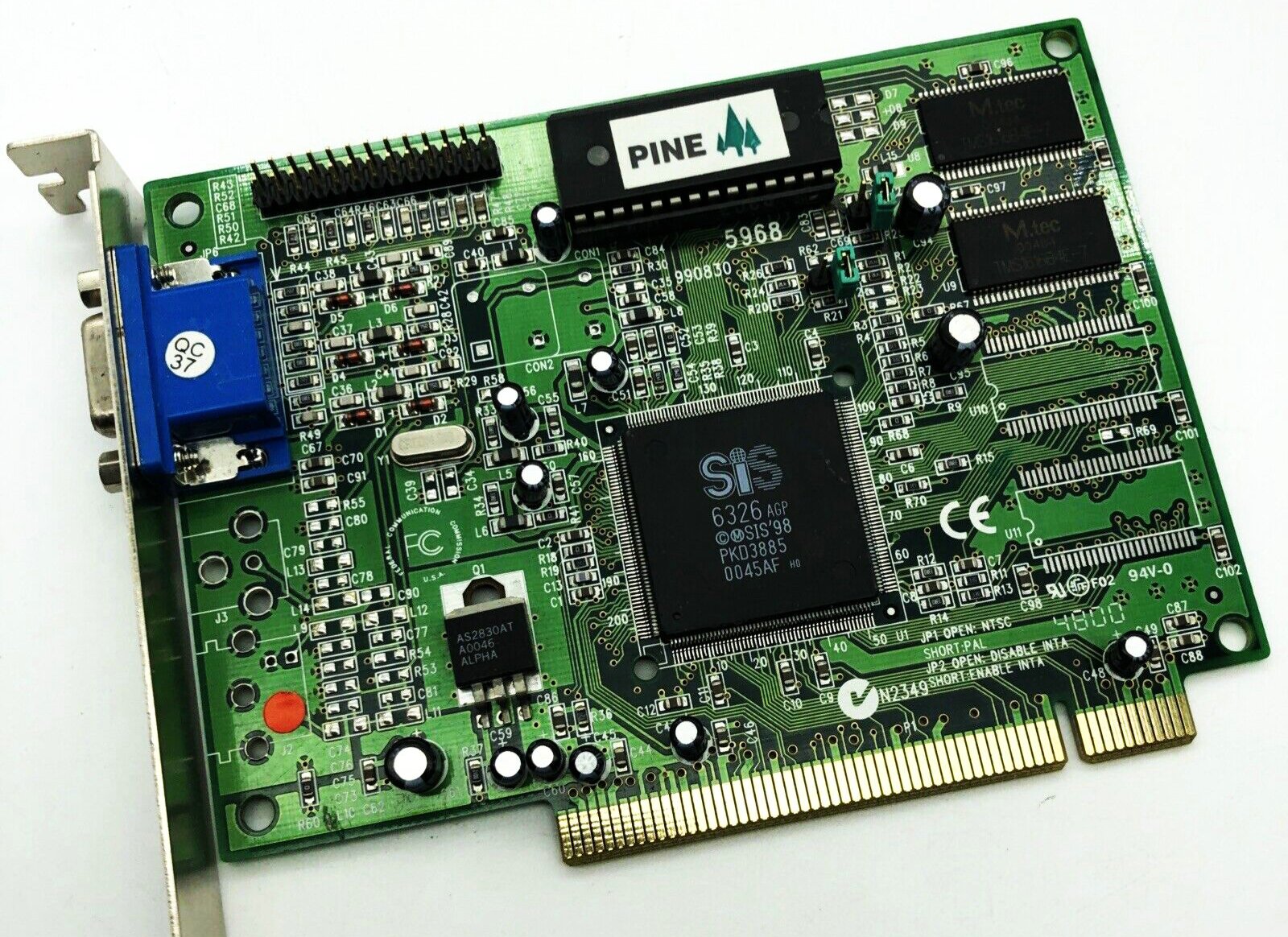
M64 and VANTA were budget versions of the TNT2. The nVidia original of this card was also called the GM1000-32. The M64 means this card has a 64-bit memory width (as opposed to the TNT2s 128-bit memory width). This results in half the memory access performance. Typically the VANTA cards (also 64-bit memory width) run a 100 MHz core clock frequency as well as memory speed, so are even slower than most M64 cards. The Riva TNT2 M64 was a graphics card by NVIDIA, launched in October 1999. Built on the 250 nm process, and based on the NV5 B6 graphics processor, in its 64 variant, the card supports DirectX 6.0. The NV5 B6 graphics processor is a relatively small chip with a die area of only 90 mm² and 15 million transistors. It features 2 pixel shaders and 0 vertex shaders, 2 texture mapping units and 2 ROPs. Due to the lack of unified shaders you will not be able to run recent games at all (which require unified shader/DX10+ support). NVIDIA has placed 16 MB SDR memory on the card, which are connected using a 64-bit memory interface. The GPU is operating at a frequency of 125 MHz, memory is running at 143 MHz. Being a single-slot card, the NVIDIA Riva TNT2 M64 does not require any additional power connector, its power draw is not exactly known. Display outputs include: 1x VGA. Riva TNT2 M64 is connected to the rest of the system using an AGP 4x interface. Rough theoretical performance of this card is 250 MPixel/s pixel rate, and 250 MTexel/s texture rate. Memory bandwidth is approximately 1.144 GB/s. Typically in real gaming performance, the M64 will outperform the original TNT at lower resolutions (320x200, 640x480 or 800x600) but starts to be on par with TNT performance levels at anything higher, due to having a smaller memory bandwidth. You can overclock an M64 card however, so focus this on the memory clock for best performance gains. Cards with 32 MB of memory helped the TNT2 Model 64 compete in higher-resolution settings, and in late 1999 this would have been a mid-market choice; not the cheapest slowest card around, but also not the fastest, and for under £90 was within reach of many. If you were in the market for an nVidia card but had more cash to throw around youd instead look at the TNT2 Ultra.

Nvidia Geforce 256
Nvidia Geforce 256
📅 1999
Ficha técnica

Historia

It is considered as the first GPU worldwide and provided full support for DirectX 7. It also featured 32 MB of DDR memory.

Ati Radeon R100
Ati Radeon R100
📅 2000
Ficha técnica

Historia

The first Radeon video cards were fully DirectX 7 compatible and featured ATIs HyperZ technology.

Nvidia Geforce 3
Nvidia Geforce 3
📅 2001
Ficha técnica

Historia

The GeForce 3 series were the first video cards in the world to feature programmable pixel shaders.

Ati Radeon 9700
Ati Radeon 9700
📅 2002
Ficha técnica

Historia

ATI released the Radeon 9700 video card in October 2002, being the first Direct3D 9.0 accelerator video card on the market.

Curiosidades

ATI was acquired by AMD in 2006. AMD no longer uses the ATI name for the Radeon video card series.

Página 1 de 1