Inicio › Ordenadores › ICL
ICL
Máquinas (1–11 de 11)
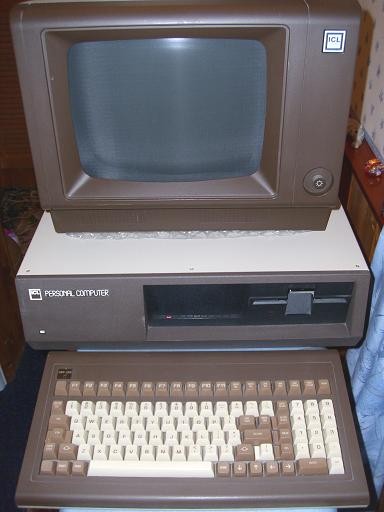
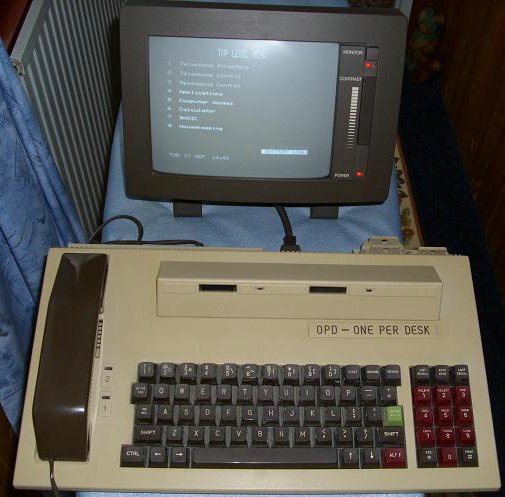
ICL OPD One Per Desk
Ficha técnica
Historia
The One Per Desk, or OPD, was an innovative hybrid personal computer/telecommunications terminal based on the hardware of the Sinclair QL. The One Per Desk was built by International Computers Limited (ICL) and launched in the UK in 1984. It was the result of a collaborative project between ICL, Sinclair Research and British Telecom begun in 1983, originally intended to incorporate Sinclairs flat-screen CRT technology. Rebadged versions of the OPD were sold in the United Kingdom as the Merlin Tonto and as the Computerphone by Telecom Australia and the New Zealand Post Office. The initial orders placed for the One Per Desk were worth £4.5 million (for 1500 units) from British Telecom and £8 million from Telecom Australia, with ICL focusing on telecommunications providers as the means to reach small- and medium-sized businesses.
Curiosidades
Utiliza microdrives de Sinclair
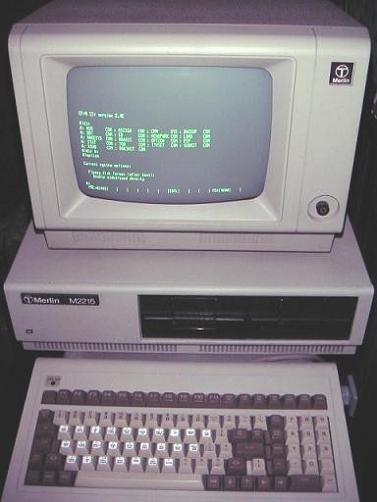
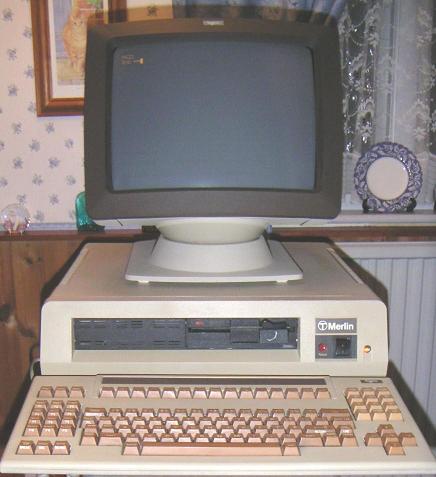
Merlin M4221
Ficha técnica
Características
Based on the Logica VTS Kennet Personal Computer
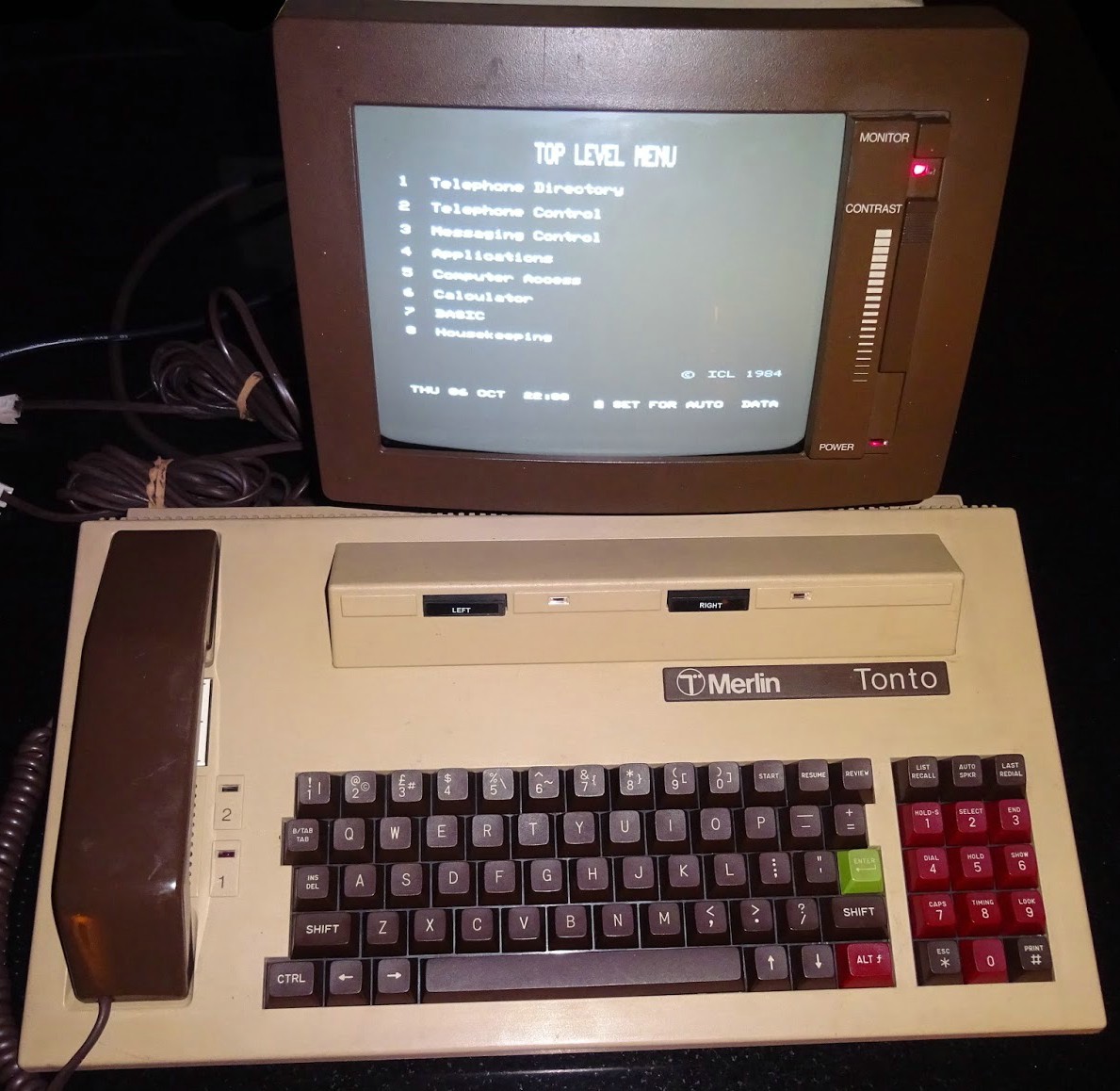
Merlin Tonto M1800
Ficha técnica
Características
Lenguajes  	None
Teclado  	Full stroke 73-key with numeric keypad
CPU  	68008
Velocidad  	7.5 MHz
Co-procesador  	Sinclair ULA custom chip
RAM  	128 KB, up to 256 KB + 2 KB of Pilas-backed RAM
VRAM  	32 KB (from the main RAM)
ROM  	128 KB, up to 320 KB using ROM packs
Modos de Texto  	42 or 64 or 84 chars. x 24 lines
Modo gráfico  	256 x 256 (8 Colores) / 512 x 256 (4 Colores)
Colores  	256
Sonido  	TI TMP5220C speech synthesiser / built-in loudspeaker
Tamaño/Peso  	44 (W) x 26.5 (D) x 6.8 (H)
Puertos de entrada/salida  	Custom connectors for ROM pack and Telephony module, Serial printer, RGB Monitor
Almacenamiento interno  	2 x 100 KB microdrives
OS  	Tonto OS
Fuente de alimentación  	Alimentacion is supplied by the monitor
Precio  	£1,500 at start. Sold to British Telecom staff for £100 complete when BT stopped to maintain them.
Curiosidades
Utiliza microdrives de Sinclair
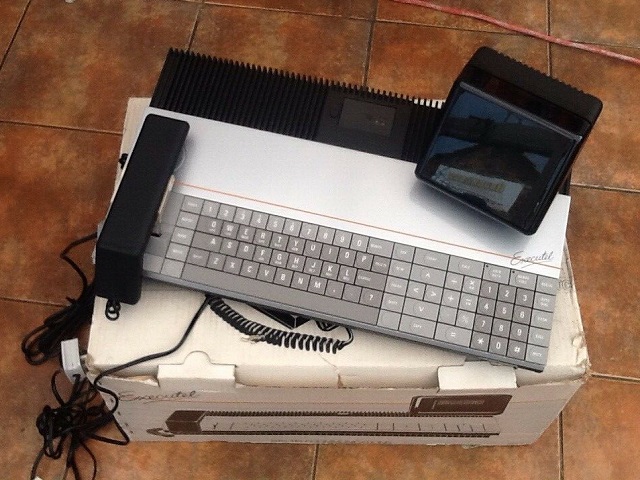
STC Executel 3910
Ficha técnica
Historia
The link to ICL here is that the same person Sean Newcombe oversaw the design of both the Executel and the OPD .
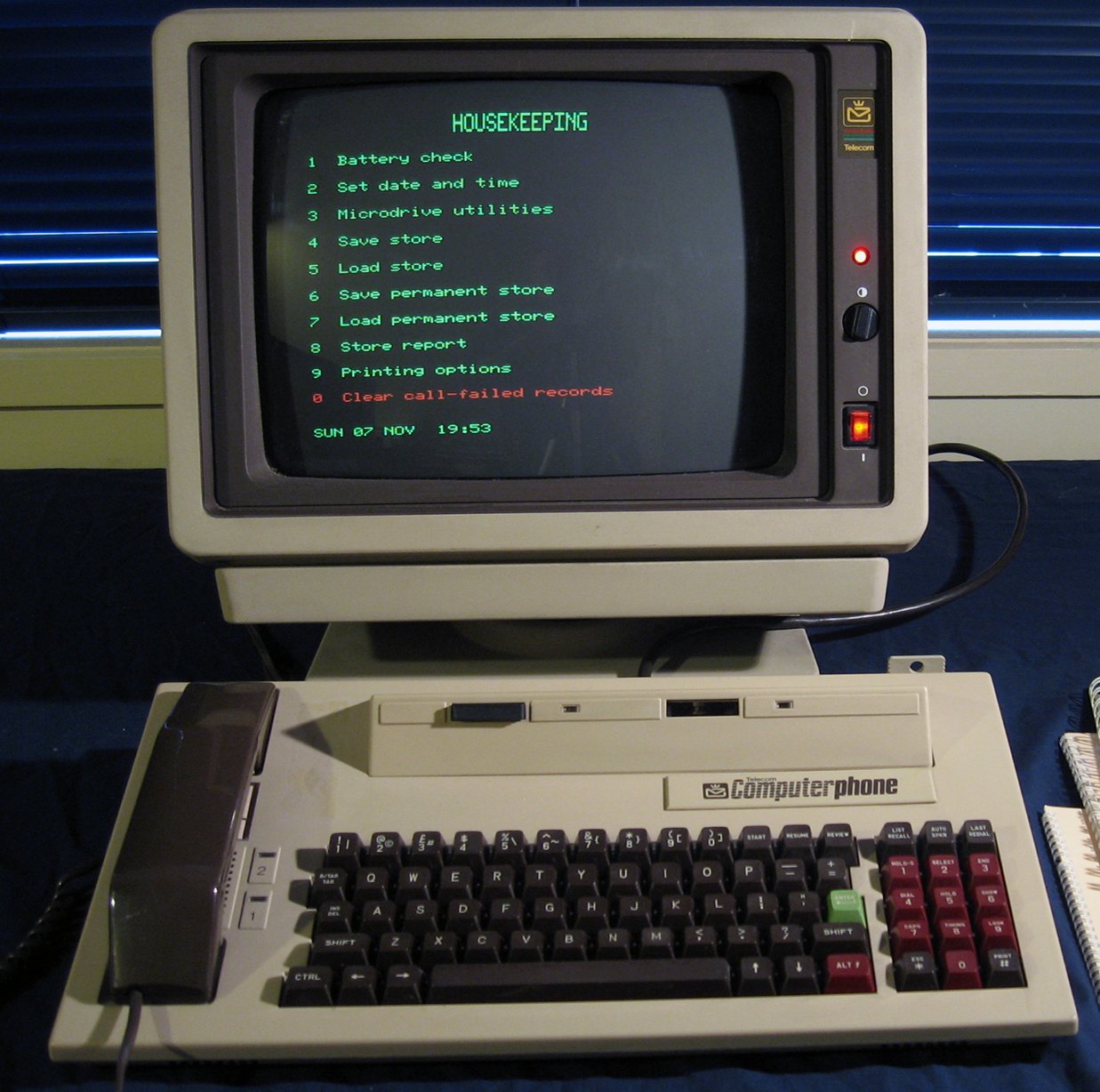
Telecom Computerphone
Ficha técnica
Curiosidades
Utiliza microdrives de Sinclair
Página 1 de 1