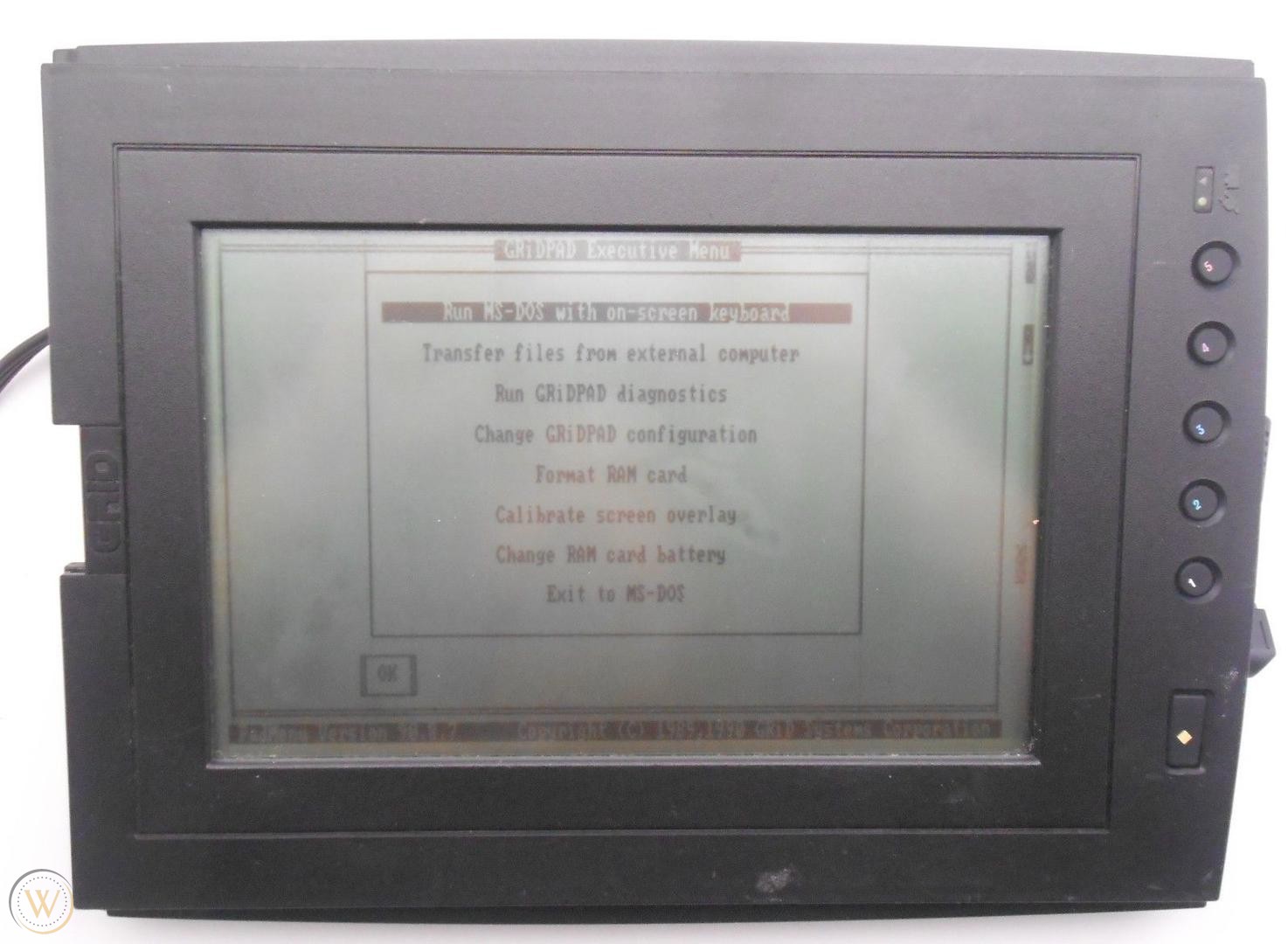
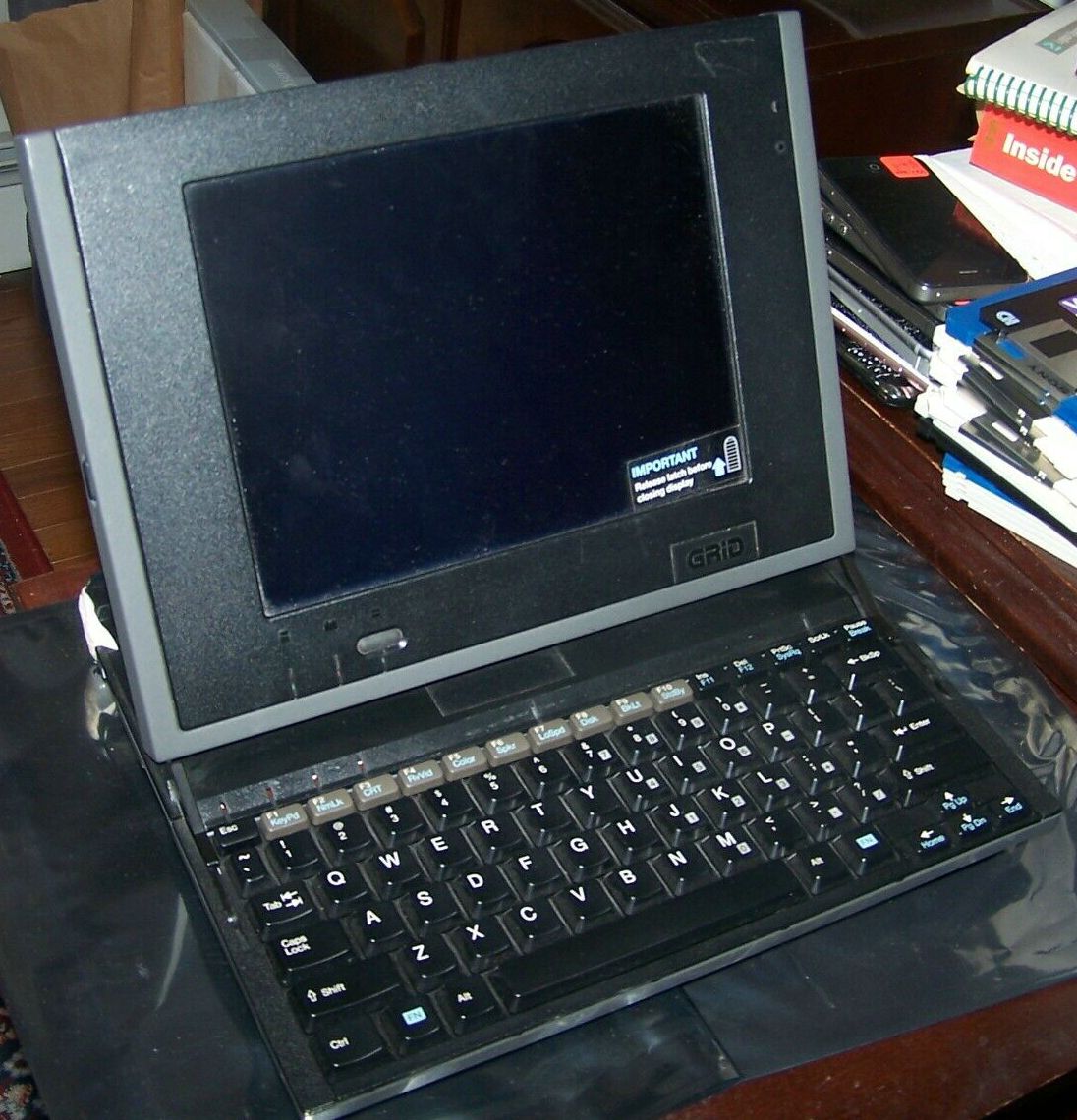
Gridpad 1900
Ficha técnica
Curiosidades
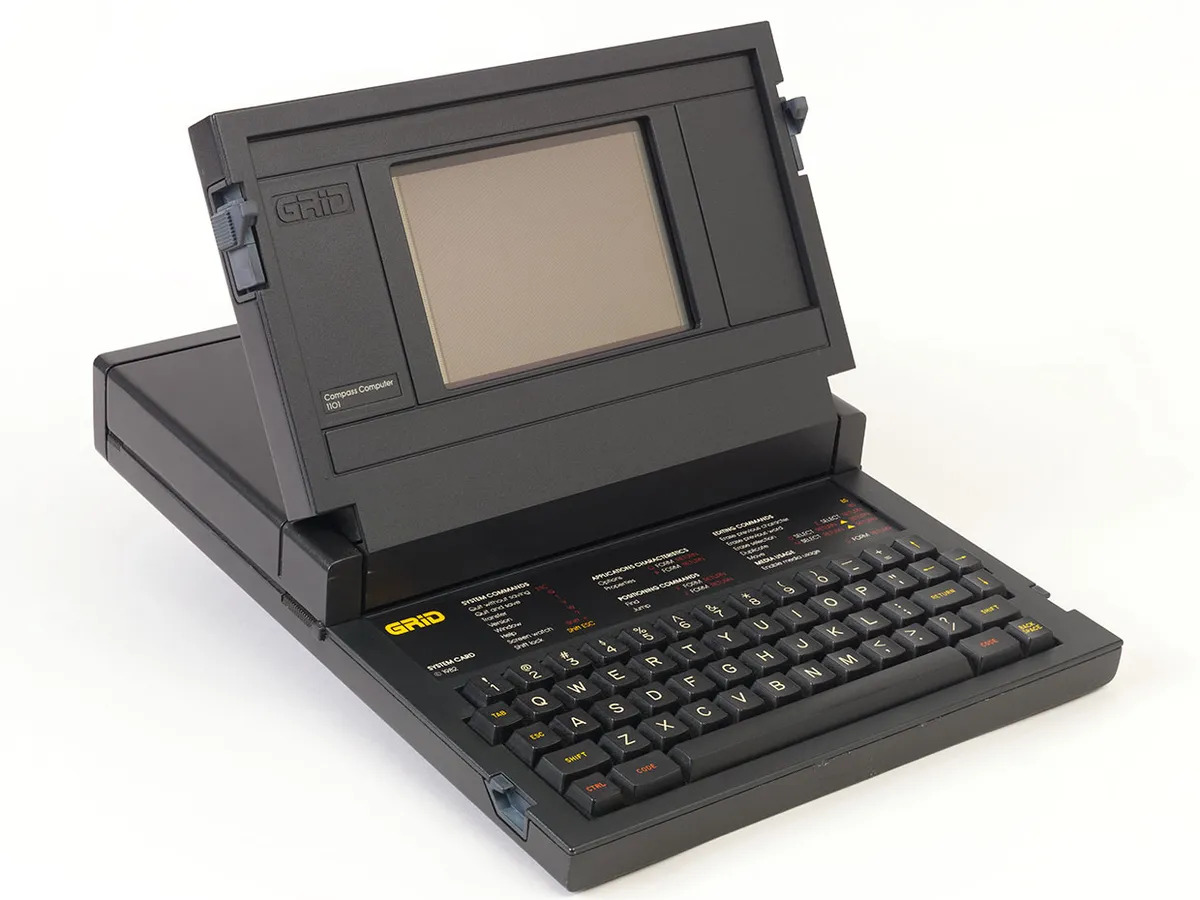
The first mobile pen computer
The first mobile pen computer
Announced:	June 1991
Available:	August 1991
CPU:	Intel 80386SL @ 20MHz
Price:	$4,765 w/ 2MB RAM & 2MB flash
$5,965 w/ 8MB RAM & 20MB HD
Weight:	3.3 lbs w/ battery and HD
Memory:	2MB to 4MB internal RAM
Storage:	20MB HD, or 2MB - 8MB flash disk
Input:	Wacom stylus, optional keyboard
Display:	10-inch VGA 640x480 LCD
OS:	Pen-based operating system
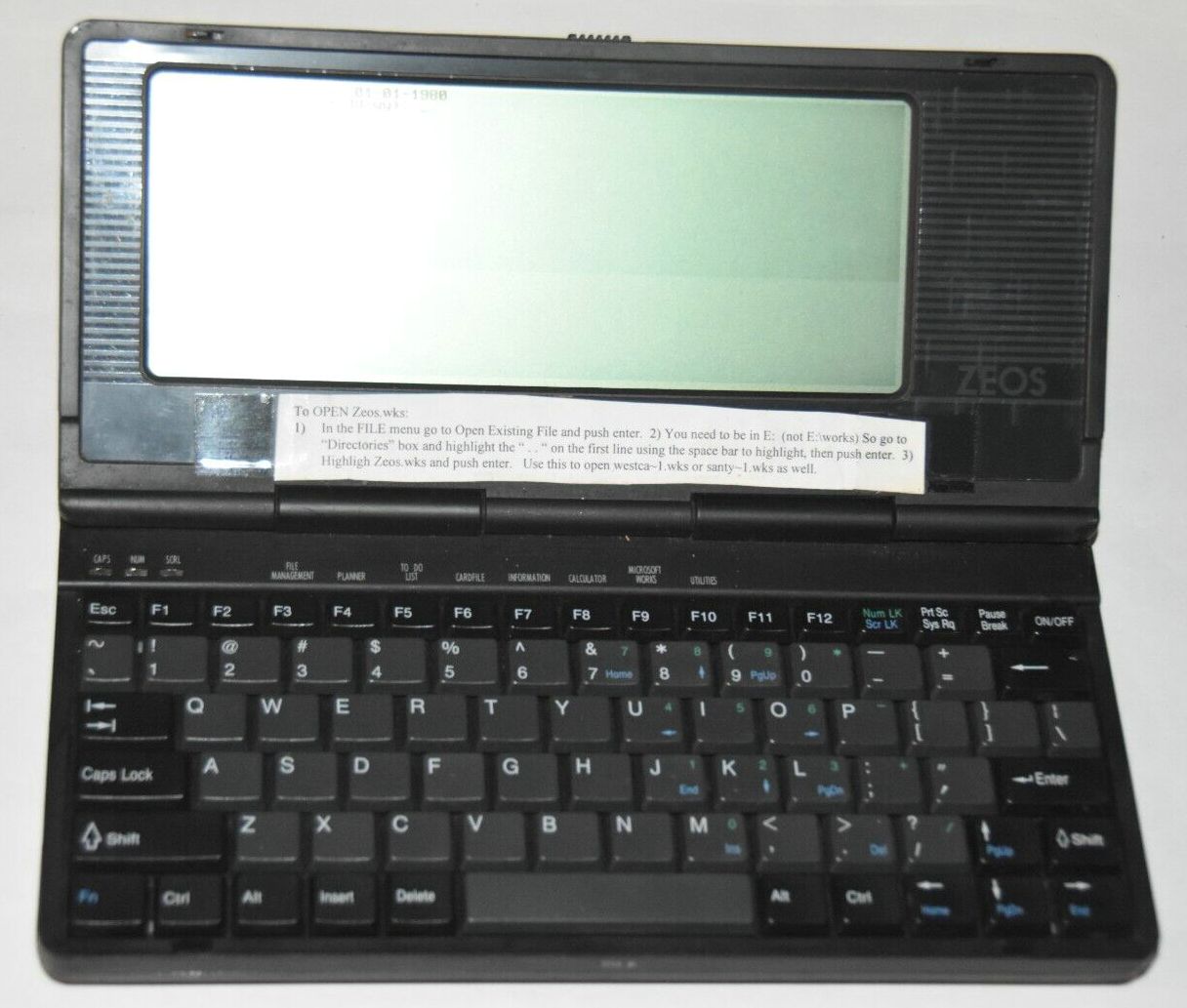
Available:	June 1992
Precio:	US$595
Peso:	1.2lbs / 550g
CPU:	NEC V30 (80C86) @ 4.77MHz / 7.15MHz
RAM:	640K system Memoria
Pantalla:	7.0 x 2.75-inch LCD
80x25 text, 640x200 Graficos
Ports:	mini-serial, mini-parallel
Expansion:	two PCMCIA card slots
OS:	MS-DOS 5.0 in ROM
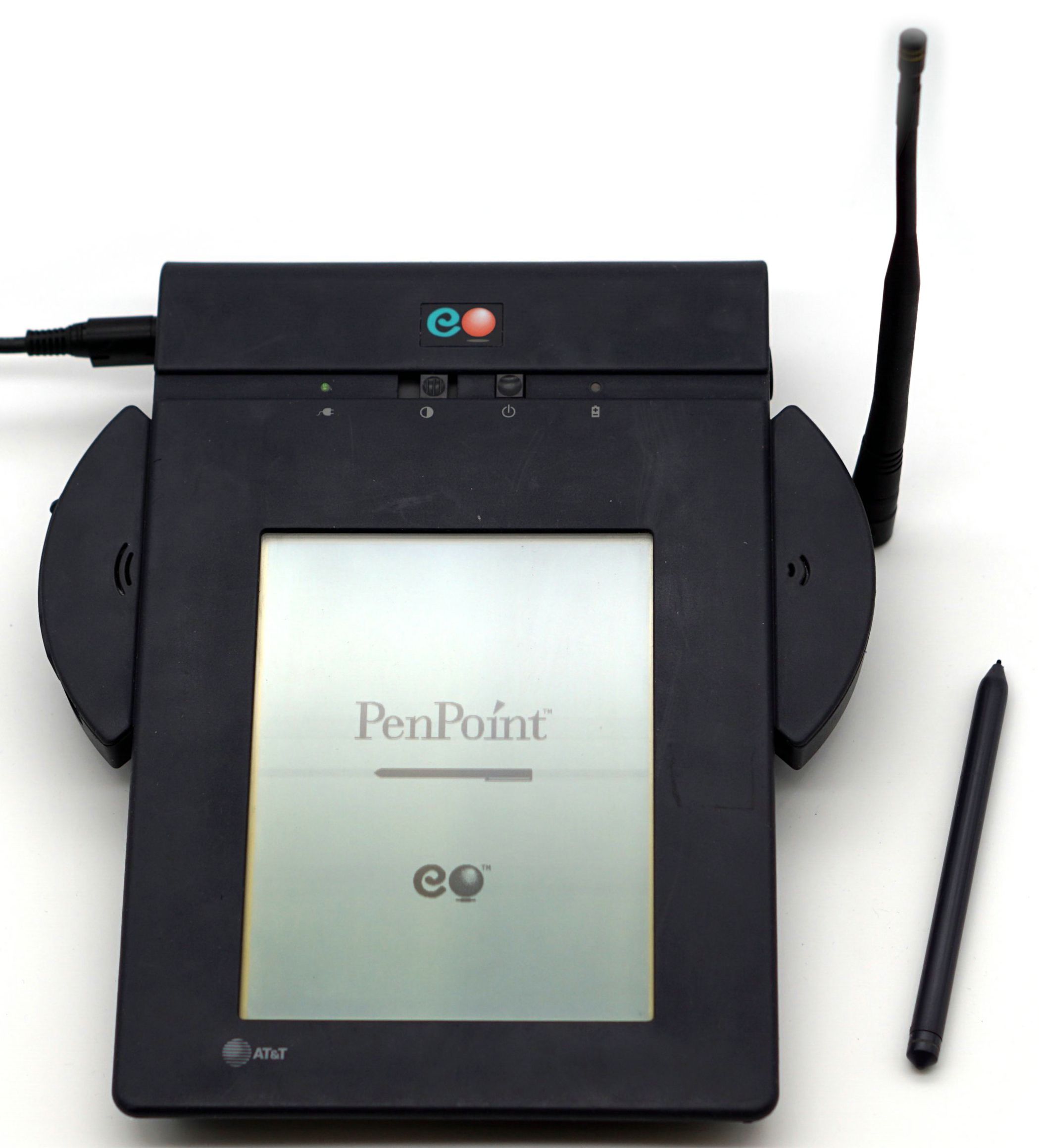
The EO is an early commercial tablet computer that was created by Eo, Inc. (later acquired by AT&T Corporation), and released in April 1993.[1] Eo (Latin for I go) is the hardware spin-out of GO. Officially named the AT&T EO Personal Communicator, it is similar to a large personal digital assistant with wireless communications,[2] and competed against the Apple Newton. The unit was produced in conjunction with David Kelley Design, frog design, and the Matsushita, Olivetti and Marubeni corporations. Two models, the Communicator 440 and 880, were produced and measure about the size of a small clipboard. Both are powered by the AT&T Hobbit chip, created by AT&T specifically for running code written in the C programming language. They feature I/O ports such as modem, parallel, serial, VGA out and SCSI. The devices come with a wireless cellular network modem, a built-in microphone with speaker, and a free subscription to AT&T EasyLink Mail for both fax and e-mail messages. The operating system, PenPoint OS, was created by GO Corporation. Widely praised for its simplicity and ease of use, the OS did not gain widespread use. The applications suite, Perspective, was licensed to EO by Pensoft.
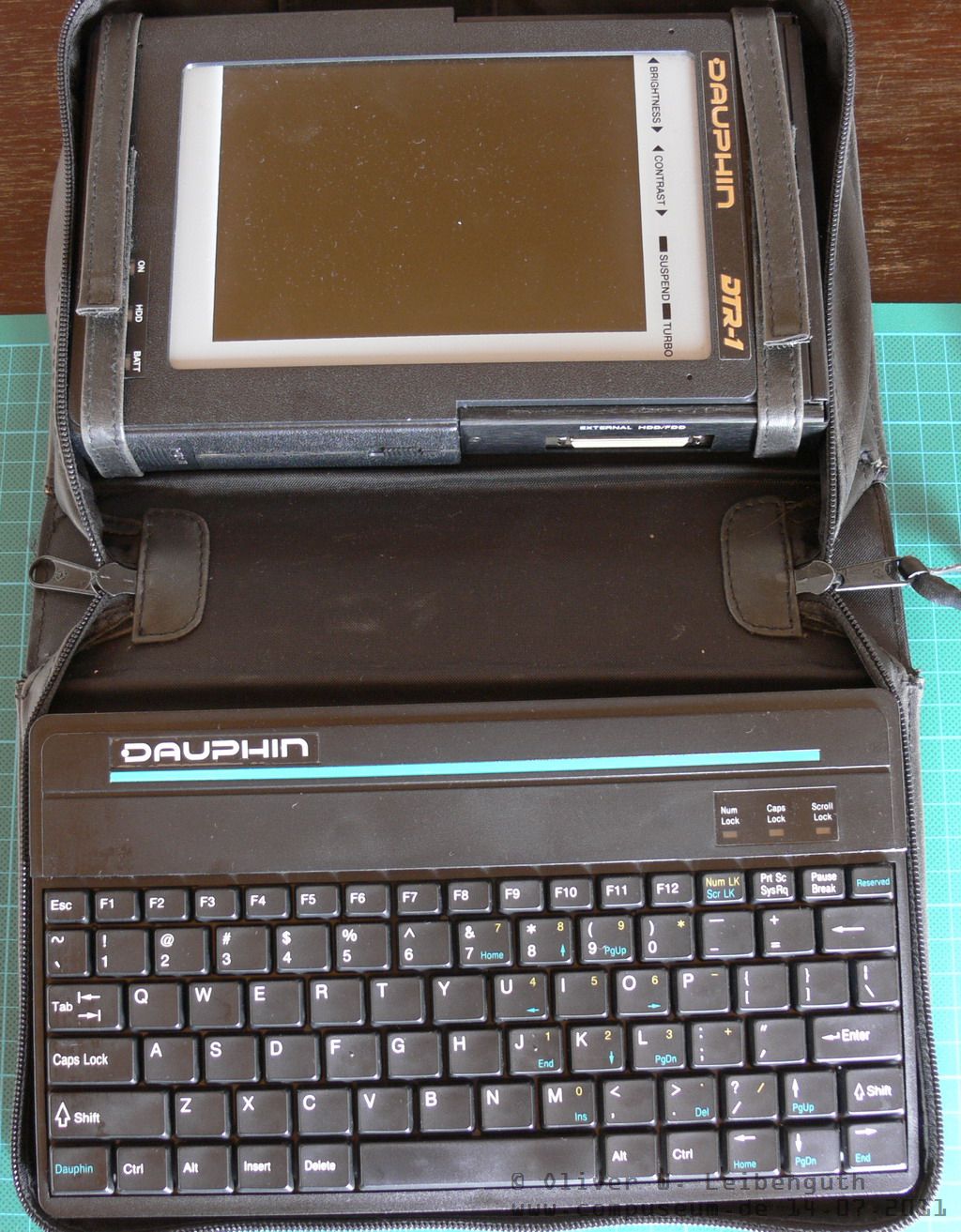
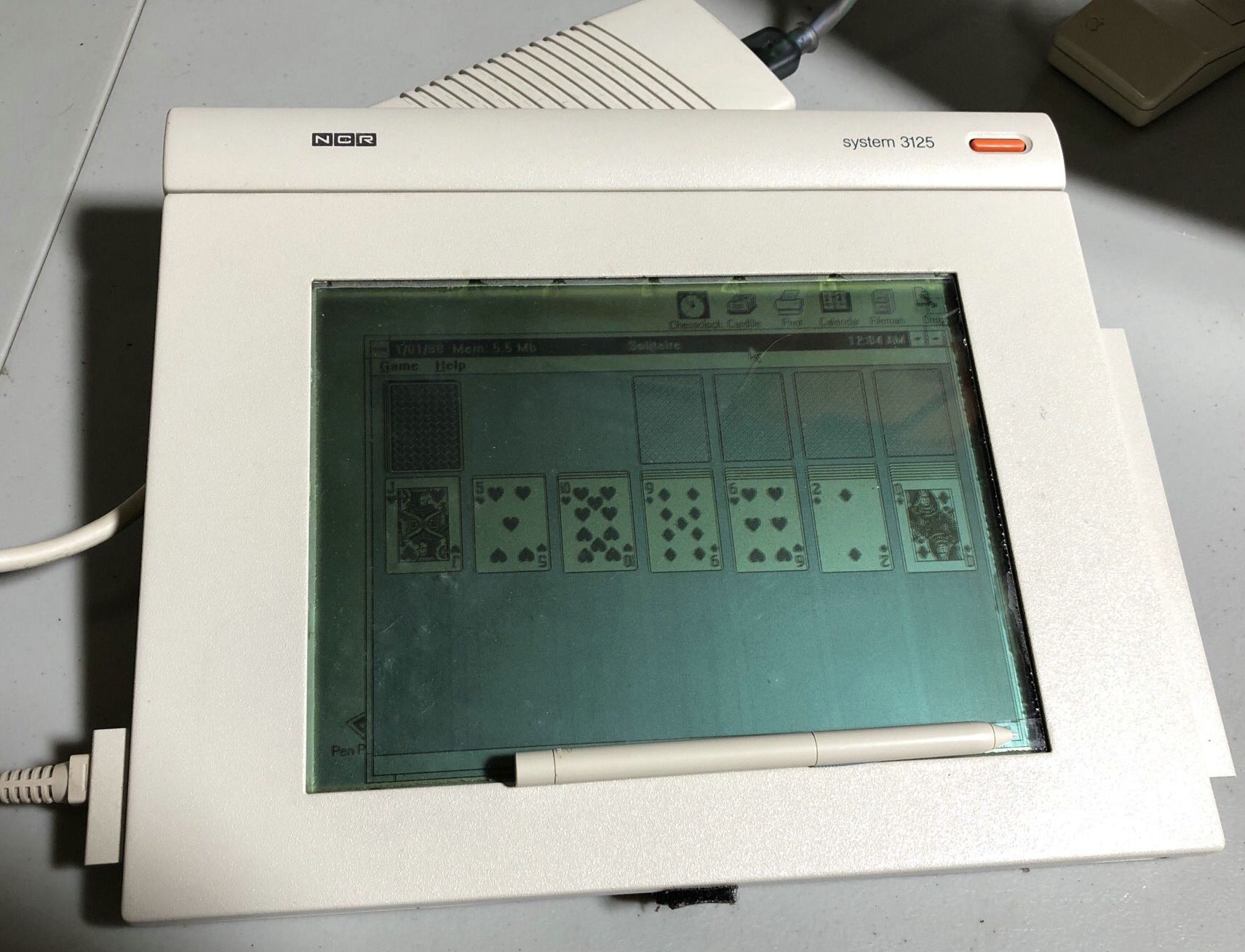
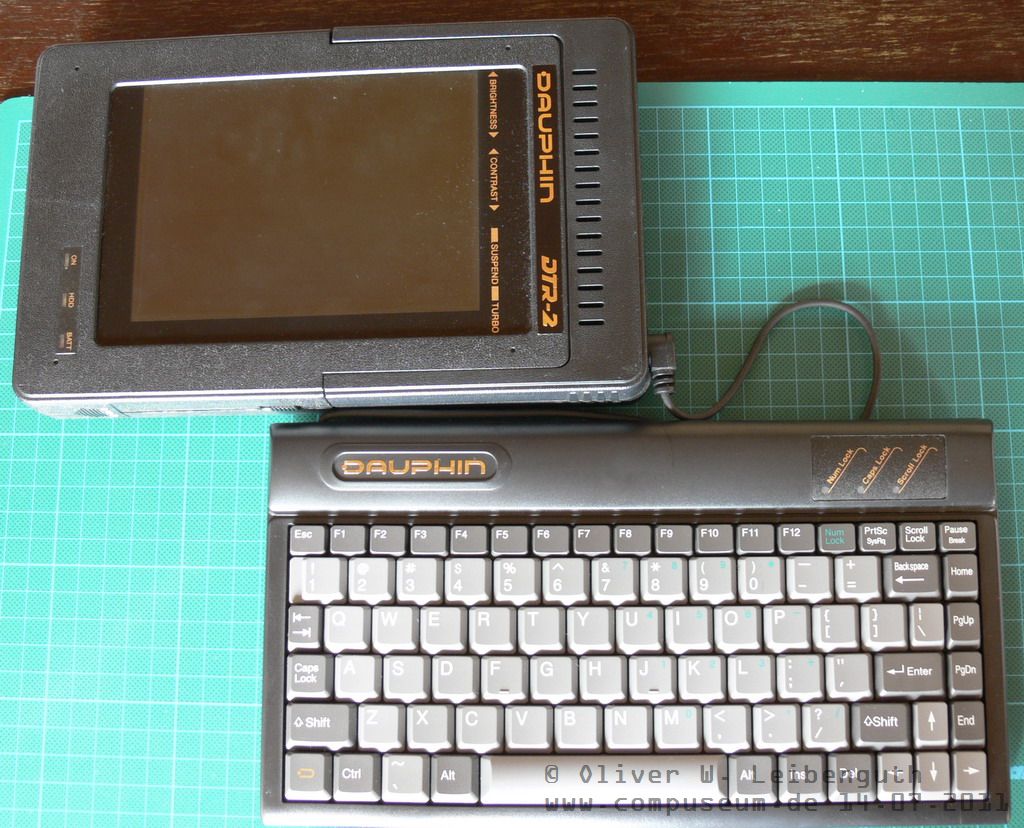
Released in 1994, the optimistically named “DeskTop Replacement 1” is an early pen-based, mobile computer. Like the NCR 3125 3 years earlier it’s a PC that you can carry in your hand and that you can operate using a pen as a mouse. Of course, the DTR-1 used updated hard- and software, but the idea is the same. Therefore, the architecture of these devices did not allow much freedom and required a desktop-class performance CPU. As a result, all these devices are the most heavy mobile pen computers with a weight almost twice as much as the one of an Apple Newton or a Magic Cap-based PDA. Not only were they heavy, the PC architecture also meant that the price was double or triple the price of a Newton or a Magic Cap device (a similar problem exist nowadays in a lesser form for Windows-based tablets as opposed to Android-based tablets). The upside of the used PC architecture was that it sported all the standard interfaces also found on desktop PCs.
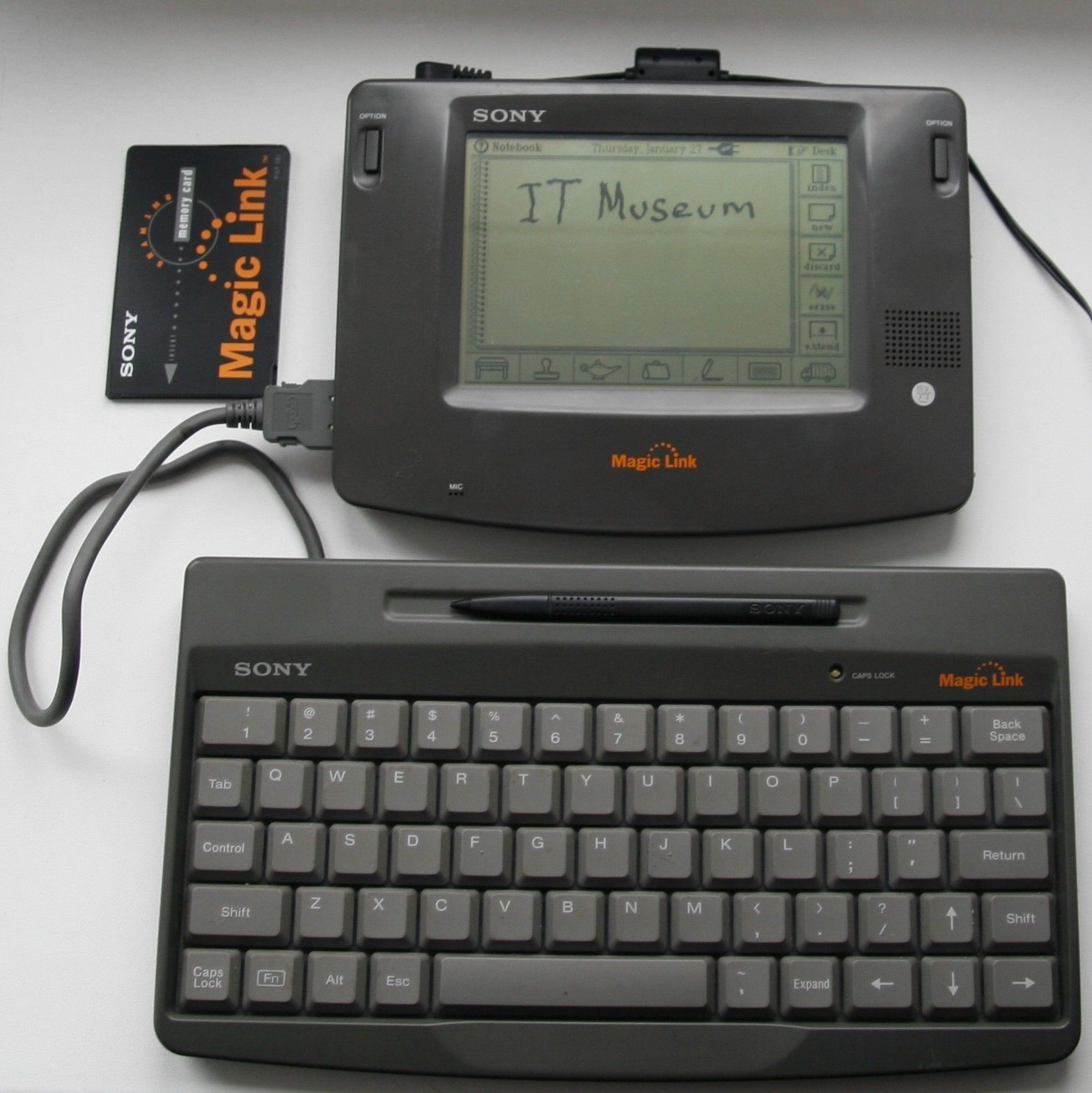
Released:	September 1994
Price:	US$999.95
Size:	1.5 x 5.5 x 7.5 inches / 40 x 140 x 200 mm
Weight:	1.2 pounds / 550 grams
CPU:	Motorola Dragon 68349 @ 16MHz
Memory:	4MB ROM, 1MB RAM
Display:	480 x 320 reflective LCD, 4 grey levels
Comms:	2400-bps data / 9600-bps fax send modem
38.4-kbps Infrared beam
Ports:	Magic Port (high-speed serial)
TeleCom headset
RJ-11 telephone
Storage:	Battery-backed RAM
optional PCMCIA SRAM card
Power:	Six AAA batteries, AC charger
optional rechargeable lithium-ion battery
OS:	Magic Cap by General Magic
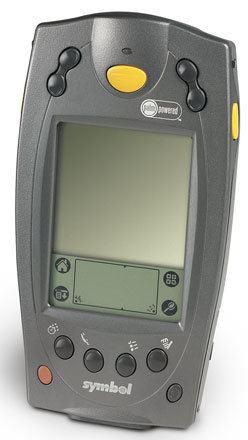
Lector de código de barras
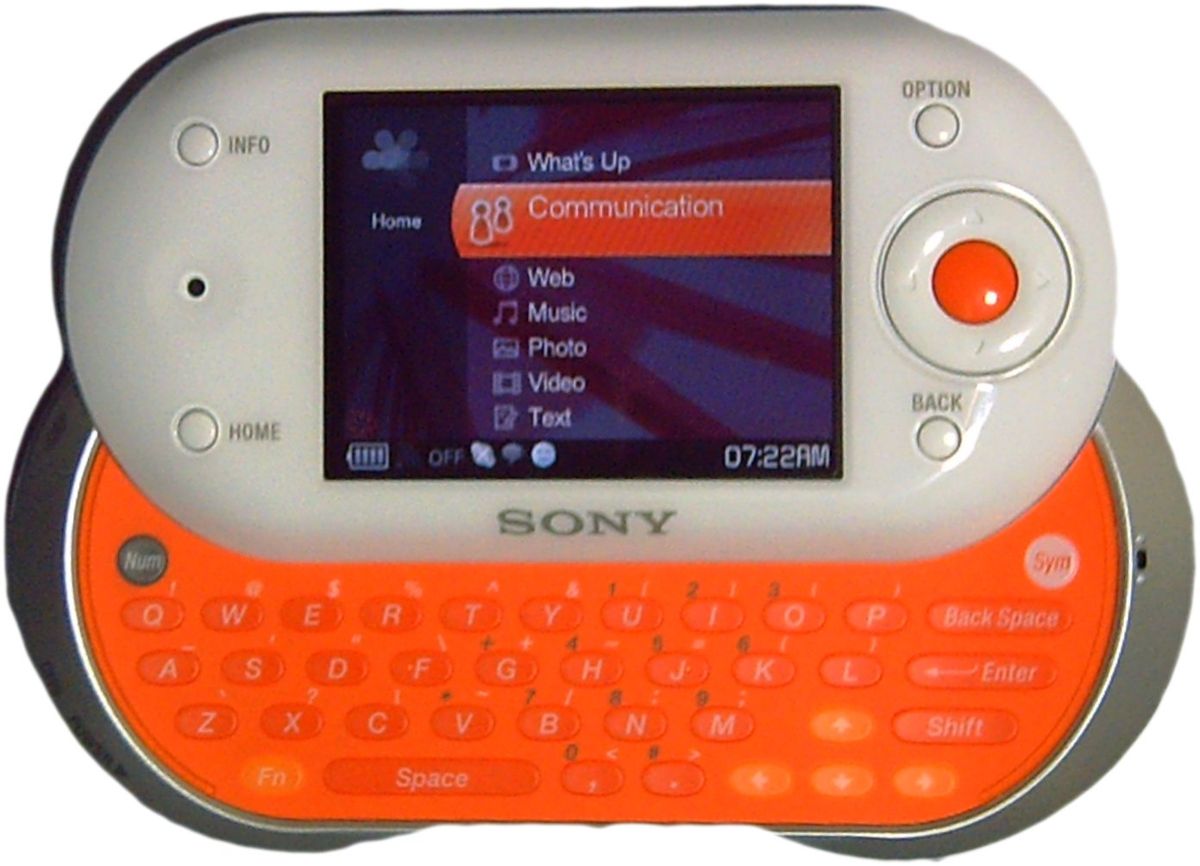
My Life Online (Mylo) was a device created and marketed by Sony for portable instant messaging and other Internet-based communications, browsing Internet web sites using the Opera web browser and playback and sharing of media files. The pocket-sized, tablet-shaped handheld device, which debuted in 2006, had a screen which slid up to reveal a QWERTY keyboard. The brand name Mylo means My Life Online. Using Wi-Fi instead of cellular networks, the Mylo was targeted to the 18–24 age group. By using WiFi networks for Internet connectivity, Mylo provided users with the possibility of reducing connectivity costs by avoiding the necessity of using GSM, CDMA or 3G cellular networks which would usually be used for devices of this size and functionality.
Mylo COM–1
The first version of the Sony mylo was launched on September 15, 2006 and includes 1 GB of onboard flash memory and a Memory Stick PRO Duo expansion slot.

The mylo is 23.9 mm (31/32 in) thick, 123 mm (4⅞ in) wide, 63 mm (2½ in) tall, and sports a 6.1 cm (2.4 in) QVGA (320 × 240) LCD screen. Its form factor is similar to the T-Mobile Sidekick in that it is held in landscape mode and has a slide out QWERTY keyboard. Its initial model colors were a glossy black and white.

Mylo COM–2
On January 6, 2008, the second edition of the Sony mylo was announced at CES 2008 in Las Vegas. This version was based on PSP technology and included AIM, a touchscreen, and a camera. The Internet Browser was changed from Opera to NetFront.[citation needed] It supported Adobe Flash for viewing Flash content such as YouTube videos and for playing Flash-based games. The mylo COM–2 had 1 GB flash memory that could be used for music and video playback.
 Two colors were available: black and white. The mylo COM–2 featured wireless G connectivity. The keyboard was backlit as well.
 System software version 1.201 added support for video recording. The mylo COM–2 was released on SonyStyle.com on January 25, 2008 for $299. It was reduced to $199 before the holiday season and was quickly drawn from production due to its poor sales.
Página 1 de 1