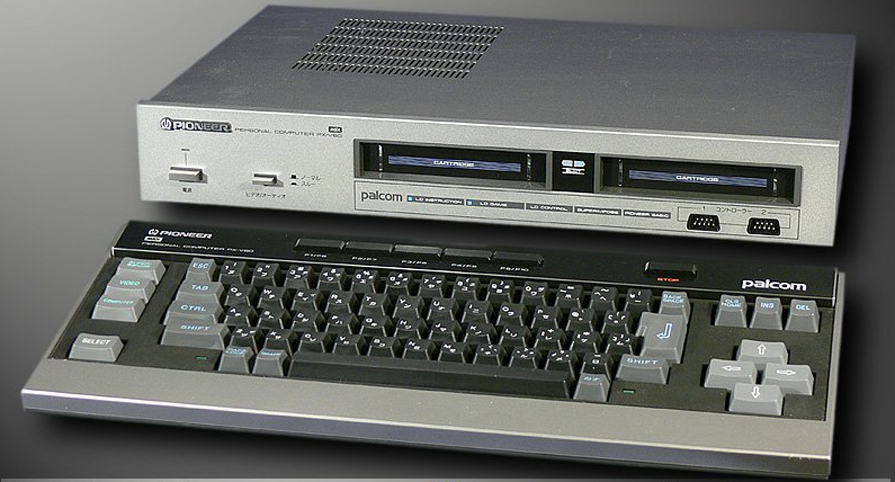
Pioneer Palcom PX-V60
| Año | 1985 |
| Origen | Japon |
| Familia | MSX1 |
| Generación | 0 |
| Accesorio | modelos |
Historia
En 1983 nace el estándar MSX y un año más tarde Pioneer saca una línea basada en ese estándar en Japón denominada Palcom. La gama se abre con el modelo PX-V7 que es un MSX con 32K de memoria y un procesador Zilog Z80 a un precio de 89.800 yenes sin la unidad de Laser-disc, que se debía de adquirir a parte, denominada LD-7000. Más tarde sacaría el PX-V60 que sería una revisión del modelo anterior, pero con memoria ampliada a 64K y dos ranuras para cartuchos. Este último modelo junto con el módulo de Laser-disc LD-7000 explotaba al máximo las capacidades del MSX, ya que era capaz de sincronizar las imágenes generadas por la unidad Laser-disc, con los sprites generados por la unidad PX-V60. Aunque realmente era un truco visual, los juegos eran espectaculares para la época, ya que no se limitaban solo a películas interactivas como por ejemplo el Dragon Lair, si no que abría la puerta a un nuevo soporte digital y juegos más realistas. Palcom developed some unique MSX1 machines such as the MSX PX-7 and its evolution the MSX PX-V60 (pictured above). The PX-7 was also released in Europe but unfortunately all games were NTSC so they required a full NTSC set-up to work (computer + laserdisc player). What made these computers unique was the fact they could be hooked up to a few Laserdisc models and control them through the Laservision interface. The Palcom MSX computers could also super-impose graphics onto Laserdisc-generated images and movies. A few games were developed for these unusual systems, and they were really ahead of their time in terms of audio-visuals. Upon hooking everything up, select option [1] MSX BASIC + P-BASIC and then just type the call ld command using the basic interface and launch the game. The Laserdisc player I used is the 1984 Pioneer LD-700, the American equivalent of the Japanese Pioneer LD-7000. The LD-700 is a heavy beast. The tray pops up after pressing the eject button and it requires to be manually pulled. The interesting thing about this combo is that it could be considered the ancestor of the Pioneer Laseractive CLD-A100 which came out 10 years later.