Inicio › Ordenadores › Pioneer-MSX

Pioneer-MSX

💾 Ordenadores6 fichas

Máquinas (1–6 de 6)

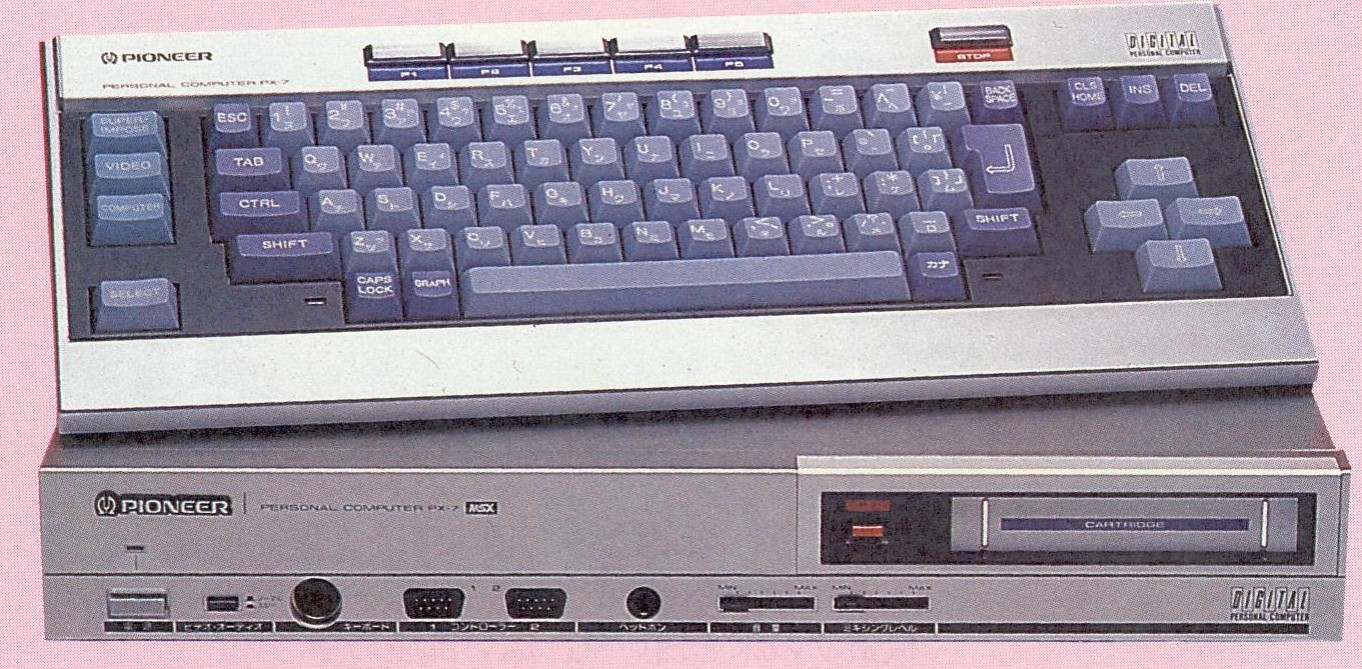
Pioneer Palcom PX-7
Pioneer Palcom PX-7
📅 1984
Ficha técnica

Historia

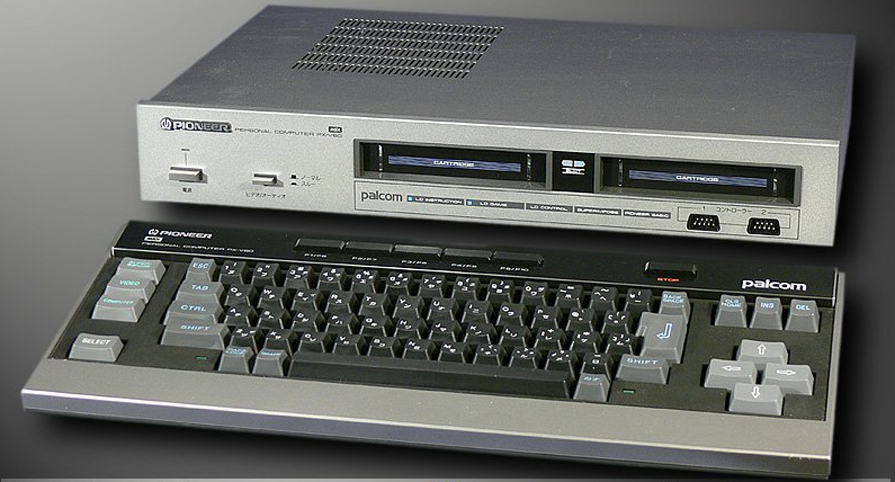
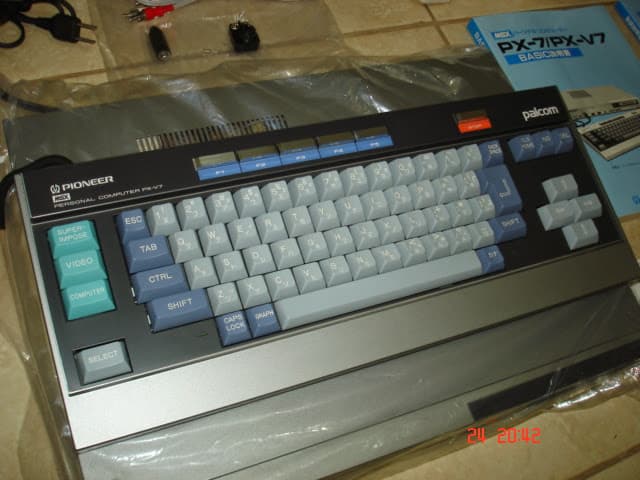
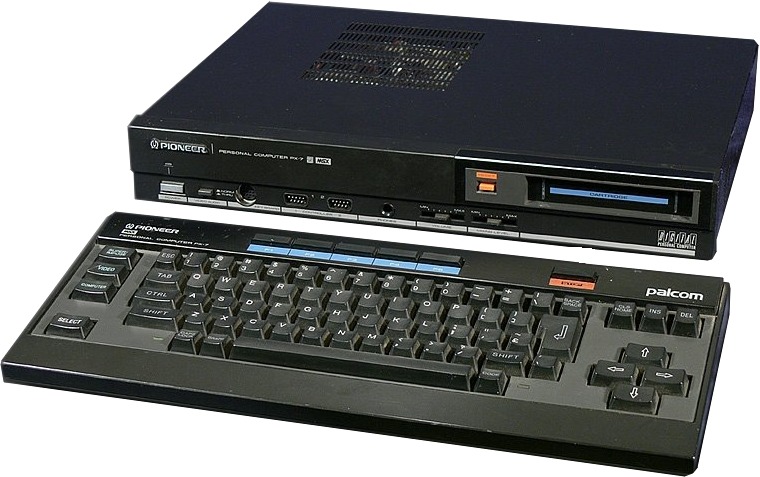
En 1983 nace el estándar MSX y un año más tarde Pioneer saca una línea basada en ese estándar en Japón denominada Palcom. La gama se abre con el modelo PX-V7 que es un MSX con 32K de memoria y un procesador Zilog Z80 a un precio de 89.800 yenes sin la unidad de Laser-disc, que se debía de adquirir a parte, denominada LD-7000. Más tarde sacaría el PX-V60 que sería una revisión del modelo anterior, pero con memoria ampliada a 64K y dos ranuras para cartuchos. Este último modelo junto con el módulo de Laser-disc LD-7000 explotaba al máximo las capacidades del MSX, ya que era capaz de sincronizar las imágenes generadas por la unidad Laser-disc, con los sprites generados por la unidad PX-V60. Aunque realmente era un truco visual, los juegos eran espectaculares para la época, ya que no se limitaban solo a películas interactivas como por ejemplo el Dragon Lair, si no que abría la puerta a un nuevo soporte digital y juegos más realistas. Palcom developed some unique MSX1 machines such as the MSX PX-7 and its evolution the MSX PX-V60 (pictured above). The PX-7 was also released in Europe but unfortunately all games were NTSC so they required a full NTSC set-up to work (computer + laserdisc player). What made these computers unique was the fact they could be hooked up to a few Laserdisc models and control them through the Laservision interface. The Palcom MSX computers could also super-impose graphics onto Laserdisc-generated images and movies. A few games were developed for these unusual systems, and they were really ahead of their time in terms of audio-visuals. Upon hooking everything up, select option [1] MSX BASIC + P-BASIC and then just type the call ld command using the basic interface and launch the game. The Laserdisc player I used is the 1984 Pioneer LD-700, the American equivalent of the Japanese Pioneer LD-7000. The LD-700 is a heavy beast. The tray pops up after pressing the eject button and it requires to be manually pulled. The interesting thing about this combo is that it could be considered the ancestor of the Pioneer Laseractive CLD-A100 which came out 10 years later. PG001-12SG Astron Belt PG002-12TO Strike Mission PG004-11KO Badlands (by Konami) SS098-0002 Starfighters SS098-0003 Umi Yukaba SS098-0008 Inter Stellar SS098-0011 Cosmos Circuit SS098-0019 Esh’s Aurunmilla SS098-0044 Rolling Blaster LCT001 Mystery Disc 1: Murder, Anyone? LCT002 Mystery Disc 2: Many Roads To Murder

Características

Lenguajes  	MSX Basic and P-Basic
Teclado  	Excellent seperated QWERTY Teclado
CPU  	Zilog Z80
Velocidad  	3.58 MHz
Co-procesador  	Standard TMS (MSX 1) VDP + additionnal TMS 9928 /A VDP for video processing
RAM  	32 KB + 2 KB
VRAM  	16 KB + 16 KB for the 2nd VDP
ROM  	48 KB (32 KB BIOS/BASIC + 8 KB P-BASIC)
Modos de Texto  	Mode 0 : 40 x 24
Mode 1 : 32 x 24
Modo gráfico  	Mode 2 : 256 x 192 with 16 Colores (Hires mode)
Mode 3 : 64 x 48 with 16 Colores (Multi colour mode)
32 sprites
Coloresc  	16
Sonido  	General Instruments AY-3-8910 Programmable Sonido Generator
3 channels, 8 octaves
Puertos de entrada/salida  	2 joystick sockets
1 cardridge slot
Tape recorder (1200/2400 bauds)
RGB & Monitor video out
Centronics port
Video in & video out (COAX)
Audio stereo Out (2 x RCA)
Audio stereo In (2 x RCA)
Laser Disc Player Interface (Laser Vision)
System Control Puertos de entrada/salida
System Control Output (x 3)
Teclado socket
Headphone out
Controlador port
OS  	MSX DOS
Pioneer Palcom PX-V60
📅 1985🌍 Japon
Ficha técnica

Historia

En 1983 nace el estándar MSX y un año más tarde Pioneer saca una línea basada en ese estándar en Japón denominada Palcom. La gama se abre con el modelo PX-V7 que es un MSX con 32K de memoria y un procesador Zilog Z80 a un precio de 89.800 yenes sin la unidad de Laser-disc, que se debía de adquirir a parte, denominada LD-7000. Más tarde sacaría el PX-V60 que sería una revisión del modelo anterior, pero con memoria ampliada a 64K y dos ranuras para cartuchos. Este último modelo junto con el módulo de Laser-disc LD-7000 explotaba al máximo las capacidades del MSX, ya que era capaz de sincronizar las imágenes generadas por la unidad Laser-disc, con los sprites generados por la unidad PX-V60. Aunque realmente era un truco visual, los juegos eran espectaculares para la época, ya que no se limitaban solo a películas interactivas como por ejemplo el Dragon Lair, si no que abría la puerta a un nuevo soporte digital y juegos más realistas. Palcom developed some unique MSX1 machines such as the MSX PX-7 and its evolution the MSX PX-V60 (pictured above). The PX-7 was also released in Europe but unfortunately all games were NTSC so they required a full NTSC set-up to work (computer + laserdisc player). What made these computers unique was the fact they could be hooked up to a few Laserdisc models and control them through the Laservision interface. The Palcom MSX computers could also super-impose graphics onto Laserdisc-generated images and movies. A few games were developed for these unusual systems, and they were really ahead of their time in terms of audio-visuals. Upon hooking everything up, select option [1] MSX BASIC + P-BASIC and then just type the call ld command using the basic interface and launch the game. The Laserdisc player I used is the 1984 Pioneer LD-700, the American equivalent of the Japanese Pioneer LD-7000. The LD-700 is a heavy beast. The tray pops up after pressing the eject button and it requires to be manually pulled. The interesting thing about this combo is that it could be considered the ancestor of the Pioneer Laseractive CLD-A100 which came out 10 years later.

Pioneer ER-101
Pioneer ER-101
Ficha técnica

Historia

http://faq.msxnet.org/msx1.html#PX7 The ER-101 is almost an MSX computer on itself! It sort of makes your MSX a Pioneer PX-7. It includes Laser Vision Player Control, Superimpose and P-Basic (extended MSX-Basic), just like is built in in the PX-7. For more pics check the MSX Hardwarelist. Until now the laser linking of Laser Vision with MSX has only been available on Pioneer equipment but this has changed now that Pioneer have put the ER-101 interface unit into general release. The ER-101 allows any MSX computer to be used with laser discs. The ER-101 Expansion processor unit looks like a slim-line video recorder and it can be easily placed on top of the Laser Vision player. It expands your ordinary MSX by adding an extra video processor chip called a TMS9928/A and an extra 2kB of RAM and further 16kB of video memory. An 8kB ROM provides extra commands called P-BASIC. Some of the space games are really sensational. You can guide a spaceship generated by the MSX graphics through a meteor storm generated by the very high resolution pictures recorded on the laser disc.

Pioneer UC-V102
Pioneer UC-V102
🌍 Europa
Ficha técnica

Historia

The Pioneer UC-V102, also called O-THE, is a Videodisc controller for Level 3 interactive systems. It is meant to be used in combination with a Laserdisc Player and the Pioneer SS-D1 video buffer. It was marketed in Japan, Europe and the US. The system is really an MSX2, but without the MSX logo.

Características

Japon USA

Página 1 de 1