Ficha técnica
Historia
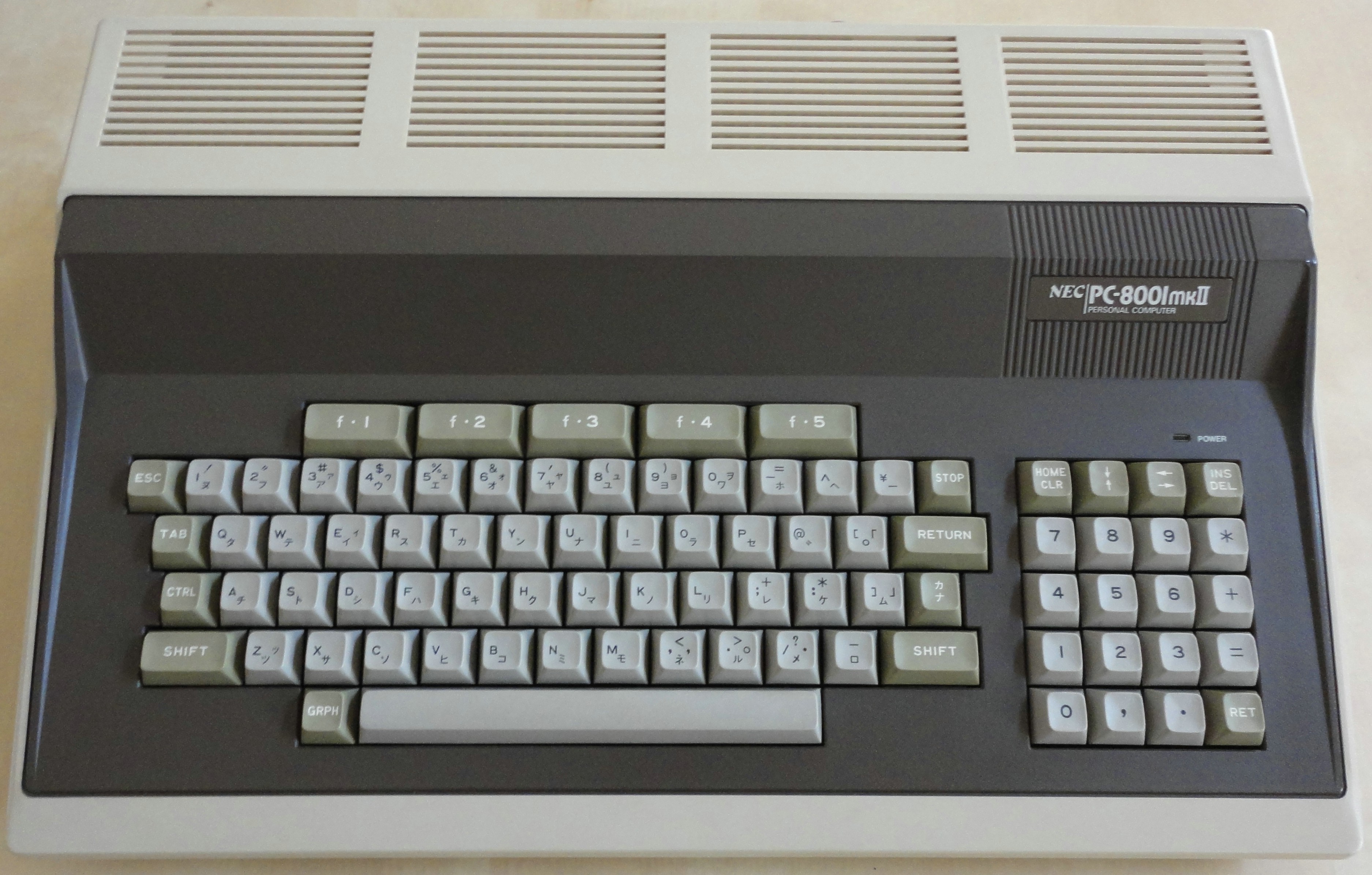
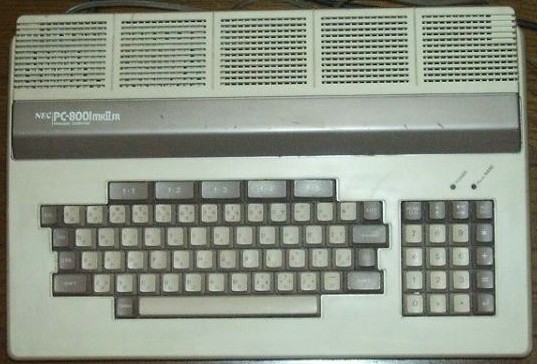
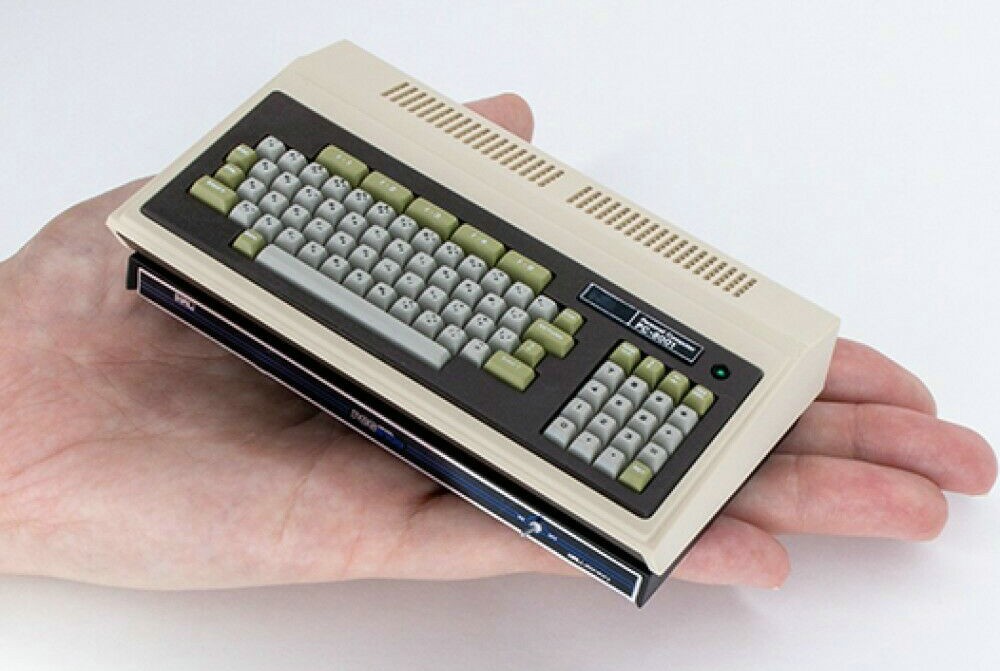
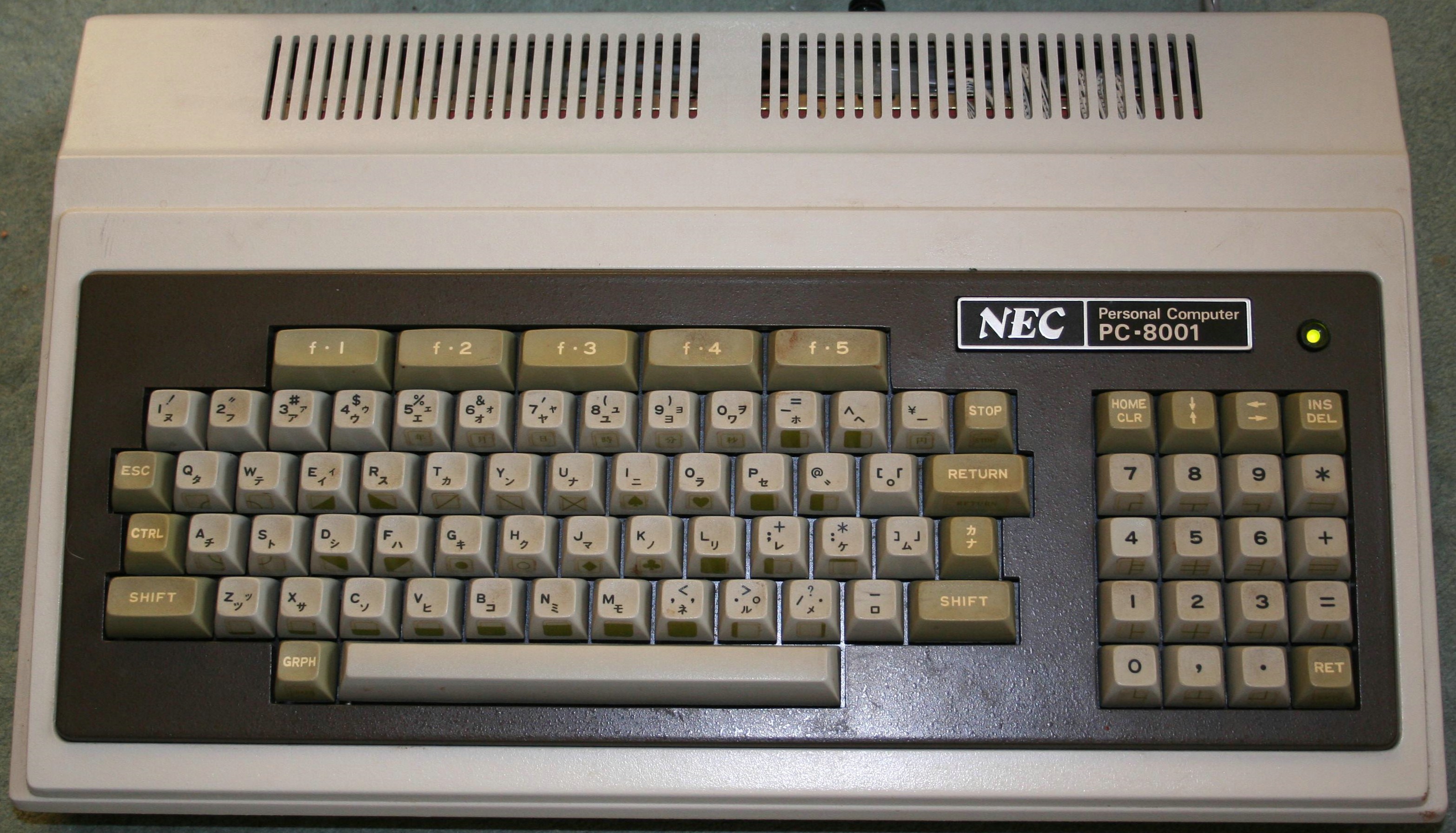
The PC-8000 series was a line of personal computers developed for the Japanese market by NEC. The PC-8001 model was also sold in the United States [2] and in the UK as the PC-8001A.[3] The first member of the PC-8000 series, the PC-8001 went on sale September 28, 1979 for ¥168,000.[1] Its design combined the keyboard and the mainboard into a single unit. At a time when most micro-computers were sold as semi-kits requiring end user assembly, the fully assembled PC-8001 was a rarity in the market. Peripherals included a printer, a cassette tape storage unit, and a CRT interface. Although it is often believed to be the first domestically produced personal computer for the Japanese market, in reality it was preceded by the Hitachi Basic Master. The information here is incomplete. Aside from the Wedge which was sold by a third party, NEC itself sold a number of addon units. The 32k RAM keyboard-shaped PC-8001A was the main micro computer, with everything built into the keyboard case $ a design similar to the Commodore 64 or he Atari 400 or 800 or Atari ST. But NEC also made and sold the PC-8031A mini disk unit, which allowed up to four half-height floppy disc drives to be installed. These were DSDD drives with 360K capacity each, so by installing 4, you got an instant storage capacity of up to 1.44 megs on drives A: and B: and C: and D:. The PC-8031A was an external beige box in which you could install the floppy drives. It had a built-in floppy drive controller and connected to the keyboard computer by a cable. Then there was the PC-8012A I/O unit. This contained serial and parallel ports as well as a primitive analog sound I/O similar to the creative sound blaster. Again, this was a beige box that also connected to the main keyboard computer through a cable, or it could connect to the 8031A floppy drive unit via a pass-through port. Finally, NEC sold the JC-1202DH(A) color character display, which uew the exact same chassis and cabinet and power supply as the earlier NEC green screen monochrome monitor but with color circuity. It was a simple analog monitor, no different from the Commodore or Apple color monitors. You could use any analog color monitor with this computer. As with the C64 or the Apple $$+, the color monitors were interchangeable. NEC also sold its own particular brand of dot matrix printer with this computer. It used a standard Centronics (today we call it a parallel) port. You had to have the 8031A drive unit to load drivers for the NEC printer and run the software. Im not sure whether the I/O unit came with an extra 32K of RAM on a board inside the beige box, but I think so. If memory serves, this thing ran Wordstar and the NEC printer was EPSON-compatible, so you could use EPSON printer drivers and output the usual graphics + text using escape and control characters to produce primitive block graphics. This unit was very impressive for its time. It cost a lot for all 3 units $ you stacked the two beige boxes up on top of one another and put the NEC monitor on top of those, then hooked them up via cable to the keyboard computer and hung the dot matrix printer (and a Hayes serial modem if you wanted) off the back of the I/O module. But if you paid the money and set it all up, you had a very fully functional machine that could connect to a BBS at 300 baud, print out properly formatted documented using standard dot matrix graphics + text, play 8-bit sounds, and you had many of the same capabilities of the later EGA monitors with a variety of different colors. The disk drives were particularly good. They didnt go bad, unlike the full-height Tandon drives on earlier computers like the Kaypro II or the TRS-80. Those full-height 48 TPI Tandons used in earlier computers were notorious for drifting out of alignment, but the 96 TPI DSDD NEC floppy drives never went bad. If you find one of these units with the floppy drive module in storage and fire it up, chances are it will still boot and work.
Características
Lenguajes  	BASIC interpreter
Teclado  	Full-stroke Teclado with numeric keypad, 5 function Teclas, JIS standard layout
CPU  	uPD 780c-1 (compatible with Z80)
Velocidad  	4 MHz
Co-procesador  	ìPD3301D (CRT Controlador), ìPD8257C-5 (DMA Controlador)
RAM  	16 KB (upgradable to 32 KB and 64 KB)
VRAM  	3 KB
ROM  	24 KB
Modos de Texto  	36x20, 36x25, 40x20, 40x25, 72x20, 72x25, 80x20, 80x25
Modo gráfico  	160 x 100 (320 x 200 in option)
Coloresc  	8
Sonido  	Built-in beeper
Tamaño/Peso  	440 x 265 x 80 mm / 4 Kg
Puertos de entrada/salida  	Centronics, RS232c, IEEE 488 (optional), cassette interface (600 baud)
Almacenamiento interno  	One or two 5.25 disk-drives (PC-8031)
OS  	N-BASIC, CP/M optional
Fuente de alimentación  	AC100V±10% 50/60Hz, 20w
Perifericos  	Fixed expansion unit with dual 5 163 KB FDD, extra 32 KB of RAM, 2 x RS232C, IEEE488 and Parallel interfaces
Precio  	168,000 yens (Japan, 1979)